

Subscribe for daily free DeFi news covering launches, tradable catalysts, and actionable farming opportunities.
Today’s News Headlines:
- $SOFID stablecoin by SoFi launches September 4
- Zest Protocol introduces Levered Bitcoin Staking on Stacks
- Aave proposes Risk Stewards for V4 instances
- Superform now live on Robinhood Chain
- Polymarket launches Perps on Polygon, up to 20x
- Notional Finance exploited for ~$1.7M via overflow bug
- Coldcard exploit update: ~1,789 BTC (~$114.7M) confirmed drained

Find and execute the 15%+ stablecoin yields in minutes
Save time without checking every protocol manually. DeFi Saver’s Discover page surfaces rates across Aave, Morpho, Spark, and more, lets you simulate leverage before committing, and handles the full loop in one click. Stop leaving yield on the table.
<Discover Yields on DeFi Saver> | Today in DeFi is Supported by DeFi Saver
TL;DR
What it is: Boros (by Pendle) turns the funding rate — crypto’s native interest rate, across $170B+ in perp open interest — into a market you can trade. A “Yield Unit” (YU) is effectively an interest rate swap: long YU pays fixed/receives floating, short YU does the reverse.
Why it matters: for the first time you can separate your rate view from your price view, convert floating funding into fixed (or back), and read a market-priced term structure of expected funding — information that didn’t exist before.
The five trades: (1) a pure capital-efficient rates punt, (2) locking your basis/cash-and-carry income at a fixed rate, (3) the cross-venue funding spread (where the flow is now — 30%+ fixed quoted on BTC recently), (4) fully-fixed carry by pairing with fixed-rate lending, (5) a looper’s hedge, since the force that spikes your borrow rate also spikes funding.
Biggest risks: leverage is capped at ~1.4x because funding gaps violently; implied APR is a price (exit early and you eat the mark); books are thin, so size moves the market and fees bite short tenors.
What’s new: a full dev stack (API, SDK, CLI, agent wallets, 256 sub-accounts) that turns these from “trades you click” into “systems you can run.”
Every cycle, the same trade dies the same death
You know the pattern. The market turns greedy, perp funding rips from 5% to 40% annualized, and for a few glorious weeks the delta-neutral basis trade prints like a machine. Then positioning flips, funding compresses — or goes negative — and the same trade bleeds while you decide whether to unwind. Meanwhile, every looper watching their Aave borrow rate triple overnight is living the mirror image of the same problem.
All of it traces back to one number: the funding rate. It’s crypto’s native interest rate — the price of leverage across a perp market running $170B+ in open interest. It sets Ethena’s yield. It drives the utilization spikes that nuke leveraged loops. It decides whether half of DeFi’s delta-neutral strategies make money this month. And until recently, you couldn’t trade it. You could only be exposed to it, and the only hedge was to close your position.
Boros is Pendle’s answer: funding rate markets, traded on margin. It launched in August 2025 on Arbitrum with just BTC and ETH funding on Binance and Hyperliquid. A year later it has cleared roughly $21.7B in notional across 180+ listed markets — 14 assets on 7 perp venues, stretching past crypto into equities and even Brent oil funding — with open interest around $150M as of August 2026. The pitch in one line: Boros turns “the funding rate on 1 BTC on Binance between now and December” into something you can buy, sell, and lock at a fixed rate.

If you’ve traded a perp, you already get Boros
Funding is the periodic payment that keeps a perp glued to spot: longs pay shorts when the crowd is levered long, shorts pay longs when it’s fearful. You’ve paid it, you’ve earned it, you’ve watched it annualize to absurd numbers at the top. Boros just takes that cash flow and gives it its own market.
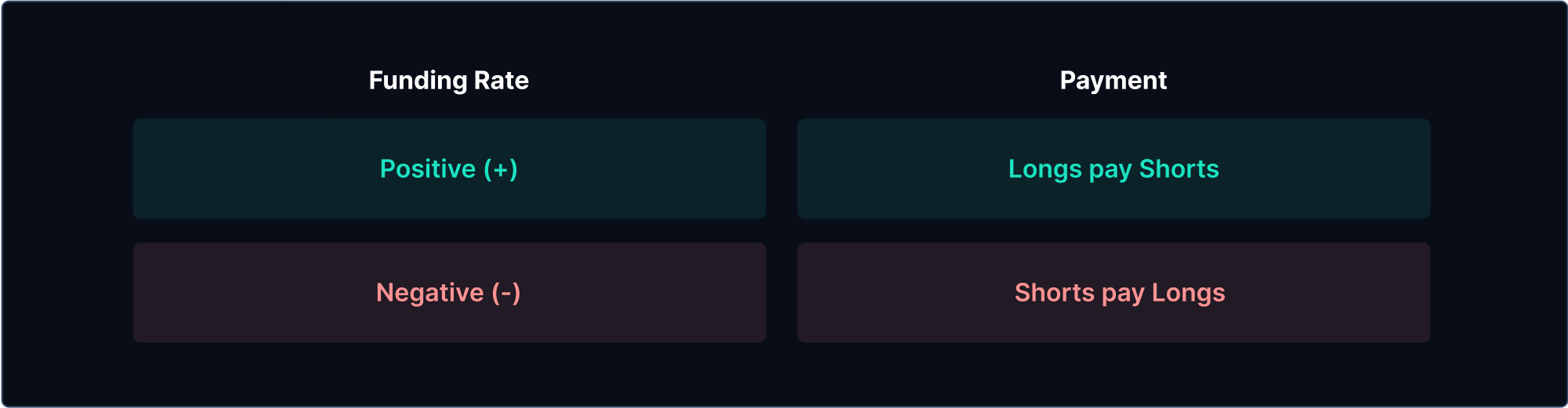
The instrument is the Yield Unit (YU). One YU-BTCUSDT (Binance) maturing December 2026 represents the funding cash flows on a 1 BTC Binance perp from now until maturity. There’s no perp underneath — Boros reads the funding prints from the exchange and settles the difference between YU holders. Strip away the branding and a YU position is an interest rate swap:
Long YU: pay a fixed rate, receive the actual floating funding. You’re betting funding runs hotter than the market expects.
Short YU: receive the fixed rate, pay the floating funding. You’re betting it comes in cooler.
The fixed rate is the implied APR — the market’s consensus on what funding will average until maturity, and the number the entire order book is quoted in. Whatever it reads when you enter is your lock.
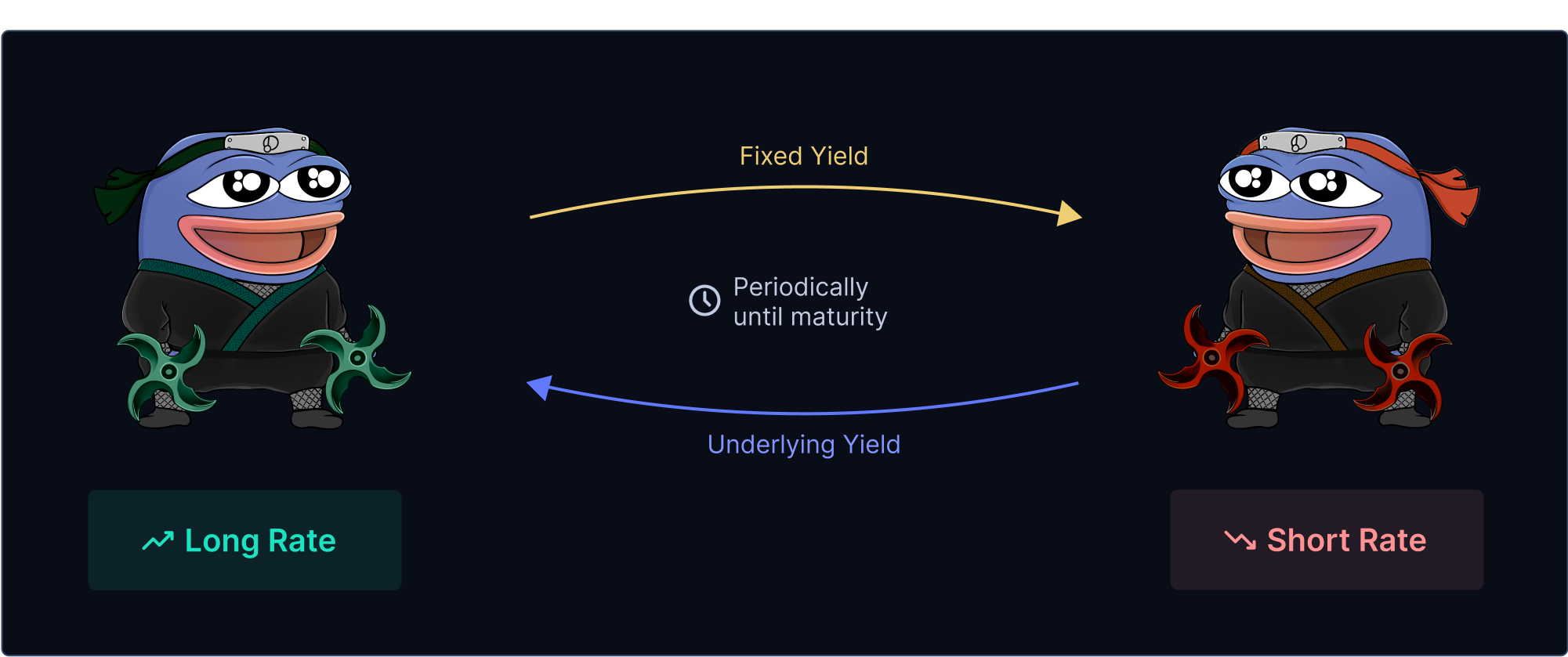
Settlement is where it becomes real. At every funding interval of the underlying market — every 8 hours for Binance, every hour for Hyperliquid — the gap between the actual funding print and your fixed rate settles straight into your margin. A YU decays as maturity approaches (less future yield left to claim) and dies at zero. Hold to maturity and your P&L is pure carry; exit early and you also wear the mark-to-market move in implied APR, which trades around like any other price.
The plumbing: a central limit order book quoted in implied APR, with liquidity vaults behind it. Margin looks like a perp exchange — isolated or cross, collateral posted in the market’s own denomination, take-profit/stop-loss included — except leverage is capped around 1.4x, deliberately, because funding can gap violently.
Maintenance requirements step down as settlements pass, so liquidation risk shrinks into maturity. Fees are a small swap fee per trade plus a settlement fee on the fixed side — trivial on long tenors, a real haircut on short ones.
The app has grown some size-friendly routes too: a P2P tab for negotiating swaps directly with a counterparty at zero price impact, an OTC desk pitched at $500k+ clips, and maker incentives on the book (advertised at up to 500% APR on resting orders inside the incentivized range) — Pendle paying people to solve its own depth problem.
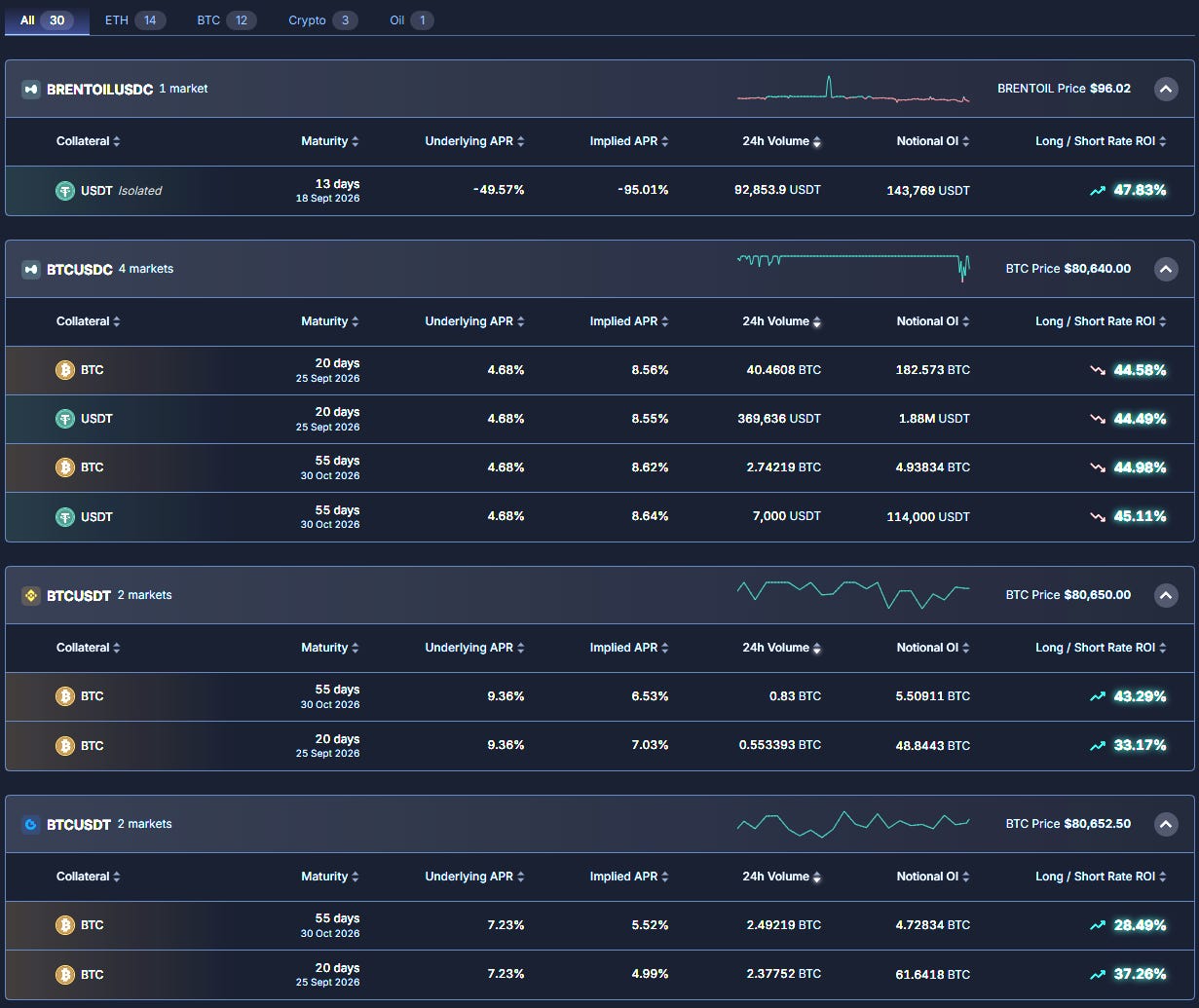
A snapshot for texture (Boros app, 2 September 2026): 27 markets live — 13 ETH, 10 BTC, 3 other crypto, and Brent oil, which was trading at −21.7% underlying funding against −15% implied that day. The machine now prices rates well outside crypto. The trade-by-trade numbers from the same session are in the premium annex at the end of this piece.
Why any of this matters: it separates the rate view from the price view, it converts floating funding into fixed (and fixed into floating) in either direction, and it gives crypto something it has never had — a term structure. Implied APRs across maturities are now a market-priced curve of expected funding. That’s information nobody had before, even if you never place a trade.
Trade 1: The pure rates punt
The simplest expression. Funding is regime-driven and mean-reverting — it spikes in manias, compresses in chop, and rarely stays negative for long. If you think risk appetite is about to return, long YU while implied APR is still cheap and collect the spike. If implied is elevated after a squeeze and you think it fades, short it and clip the rich fixed rate while funding normalizes back down.
The kicker is capital efficiency. A YU position costs a fraction of running the equivalent delta-neutral perp position, so this is the cheapest pure expression of “leverage demand goes up” or “leverage demand goes down” anywhere in crypto — no delta, no basis legs, no spot inventory.
Trade 2: Locking the basis
This is the institutional-size use case, and it’s the one Boros was clearly built around. Anyone running cash-and-carry — long spot, short perp — earns floating funding, and floating funding has a habit of vanishing exactly when everything else is going wrong. Ethena is the canonical case: sUSDe’s yield is, to a large degree, funding income on short perps.
The fix: short YU on the matching market and notional.
Your perp leg receives floating funding; the short YU pays that same floating stream away and hands you the fixed implied APR instead. The floating legs cancel and fixed income is what remains. Pendle’s own worked example: short 50 BTC of Binance perps, short 50 YU-BTCUSDT at 5% implied, earn a flat 5% to maturity no matter what funding does.
The judgment call is entry, because this trade is you selling your floating income at the market’s price. Do it when implied looks rich against your view of where funding actually averages — after a mania, not in the depths of a risk-off — and the lock is a gift. Do it when implied is depressed and you’ve fixed yourself into the floor. The live screens make the price of certainty explicit — today’s numbers are in the premium annex.
Trade 3: The cross-venue spread (where the flow is now)
The same asset funds at persistently different rates on different venues. Hyperliquid, Binance, OKX and Lighter each have their own settlement schedules, user bases and risk parameters, and the gaps between their funding prints are structural, not noise. Everyone knew this; the problem was that farming the spread meant holding a floating position that could invert overnight. Boros makes the spread lockable. Four legs:
Long the perp on the cheap-funding venue, and long that venue’s YU — fixing what you pay.
Short the perp on the rich-funding venue, and short that venue’s YU — fixing what you receive.
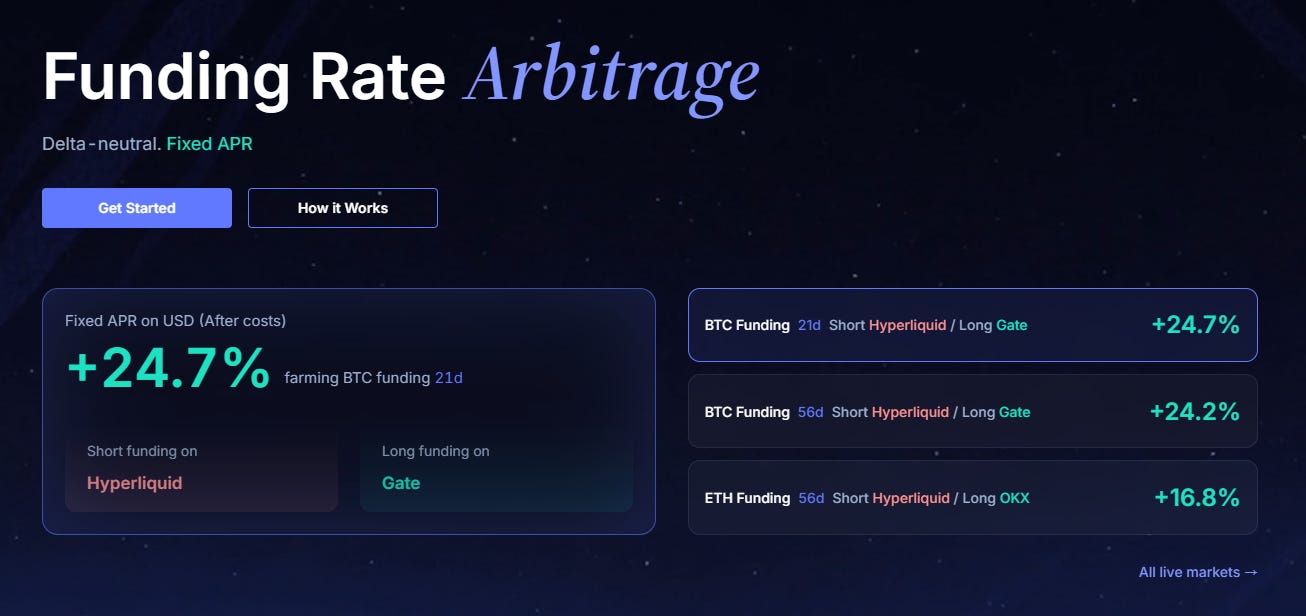
The perp legs cancel each other’s delta, the YU legs swap both floating streams into fixed, and you hold the fixed spread between two venues to maturity — price-agnostic, rate-locked. Pendle’s backtest over September–November 2025 put the weighted average locked rate around 11.4% APR on BTC (October maturity) with peaks at 23.5%, and roughly 6% on ETH with peaks at 17.1%.

The opportunity hasn’t closed — the live board was quoting north of 11% fixed on BTC the day this was written, and the full construction, leg by leg with the day’s numbers, is the first setup in the premium annex.
Execution has also matured:
Pendle’s CrossEx tooling now runs both perp legs off a single shared collateral pool, killing the classic nightmare of one leg getting liquidated while its hedge sits on another exchange.
Why it isn’t free money: Boros order book depth caps clips at low-six-figure margin, four legs mean real execution risk, any leg that isn’t cross-collateralized can be liquidated on its own, and the fee stack — Boros swap and settlement fees plus CEX taker fees — takes a serious bite out of thin spreads on short tenors.
Trade 4: Going fully fixed with fixed-rate lending
Boros fixes the funding leg of a position. Most real positions also have a financing leg, and DeFi now has plenty of places to fix that too — fixed-term markets on Morpho V2, order-book lenders like Loopscale, or PTs as a fixed-rate deposit. Put the two together and you can build trades where nothing floats:
The fixed-fixed carry. A basis position plus a short YU is a synthetic fixed-income asset (trade 2). Finance it with a fixed-rate borrow whose term matches the YU maturity and the whole structure is locked end to end — fixed income in, fixed cost out, spread pocketed. What’s left is execution, venue and contract risk. Not rate risk.
Relative value between the two rate worlds. Once funding can be received fixed, it’s directly comparable with every other fixed rate in DeFi. Implied funding at 9% while fixed stablecoin lending pays 6%? The basis-plus-short-YU package is the better fixed deposit — or borrow fixed at 6% and fund the 9% receivable. Boros adds a new point to DeFi’s fixed-rate curve, and the gaps between that point and lending rates are themselves the trade.
One discipline makes all of this work: duration matching. Pick a loan term that matches the YU maturity, exactly the way a fixed-rate borrow gets matched to a PT maturity in PT loops. Mismatch the terms and you’ve reintroduced the rate risk you just paid to remove. And the pairing runs in both directions — the premium annex includes a defensive version built on Pendle PTs, where the fixed leg is the shelter and a long YU rents the upside back.
Trade 5: The looper’s hedge
Almost every leveraged position in DeFi is financed with a variable-rate borrow — stablecoins behind sUSDe and PT loops, WETH behind LST and LRT loops, floating legs on Morpho, Euler, Fluid and Aave everywhere.
That borrow rate is the position’s main floating liability, it reprices block by block with utilization, and its spike is the recurring tail event of the whole looping game: a loop printing 25% ROE flips to negative carry within hours, and at 5–10x leverage that bleeds fast.
Here’s the thing — the force that spikes borrow rates in a bull episode is the same force that spikes funding. Demand for leverage. When the market turns greedy, traders bid up perp funding, loop-borrow stablecoins and lever ETH all at once, so borrow rates and funding surge together.
Which means a long YU (pay fixed, receive floating) is a natural proxy hedge for any floating borrow leg: in exactly the episodes where your borrow cost explodes, funding prints far above your locked rate and Boros pays you the difference every settlement.
Entered in a quiet regime when implied is low, the hedge is cheap — and it can even carry positive if funding averages above implied. Match the market to the liability: BTC or ETH funding for a stablecoin borrow (both track the same leverage cycle), ETH funding for a WETH borrow.
Size it against what the spike actually hits — the borrowed notional, not your equity. A $100k-equity loop at 5x carries about $400k of borrowings; a borrow spike from 6% to 20% lasting a month costs roughly $4.7k extra.
A long YU with notional in the neighborhood of the borrowed amount, entered at low implied, pays out on a similar scale when funding makes a comparable move — which, in leverage-driven episodes, it historically does. The insurance can be priced straight off the live screen — the premium annex does exactly that, on a real sUSDe/USDC position.
The worked example: the sUSDe loop. Deposit sUSDe on Aave, borrow USDC or USDT, buy more sUSDe, repeat. This loop is unusually well suited to the hedge because of a timing mismatch: sUSDe’s yield arrives smoothed and lagged, while the borrow rate reprices instantly. When stablecoin utilization rips, the spread goes negative before the higher funding income ever shows up in sUSDe. A long YU on a Binance BTC or ETH market settles every 8 hours, so the payout lands while the squeeze is happening — not weeks later. The same logic carries to any loop whose collateral yield responds slowly to the leverage cycle while its borrow cost responds immediately. Which is most of them.
The newest layer: Boros goes programmatic
Everything above assumes a human clicking through the web app. Boros’s latest push removes that assumption. The team has been quietly building out a full developer stack — an open REST API (api-boros.pendle.finance), a TypeScript SDK, contract-level access through the Router — and the newest piece is the Boros CLI, which takes the whole platform out of the browser and into the terminal: markets, order placement and cancellation, position and margin management, all scriptable.
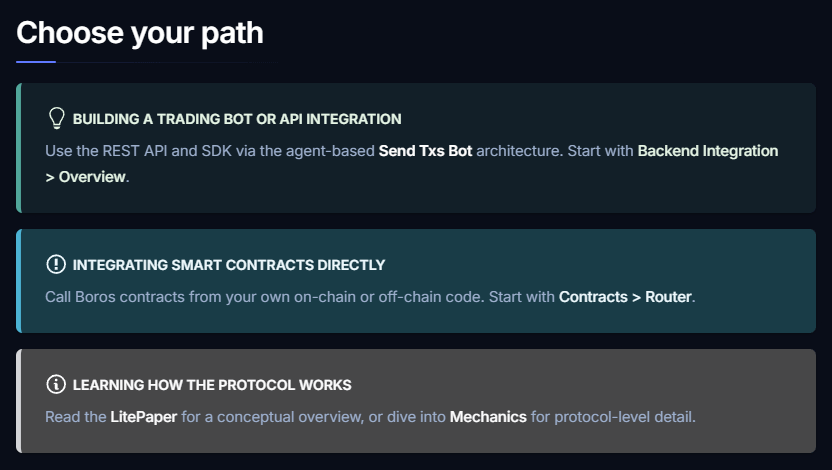
The design detail that makes this more than a convenience is the agent wallet architecture. You approve a separate key that can trade but cannot withdraw — so a bot, a script, or a server can run your strategy without ever holding the keys to your funds. Pair that with sub-accounts (up to 256 per wallet, each with its own margin and positions) and you have real strategy isolation: one sub-account market-making ETH funding, another running the cross-venue spread, a third holding your loop hedge, none able to blow up the others.
This is what expands the use case set from “trades a person can put on” to “systems a person can run”:
Algo trading on funding. Funding is one of the most regime-driven, mean-reverting series in crypto — exactly the kind of thing systematic strategies feed on. The rates punt from trade 1 becomes a rules-based book: fade implied when it stretches from its structural anchor, add long YU convexity when regimes go quiet, all without watching a screen.
Spread monitoring that never sleeps. The cross-venue arb’s constraint is that windows open and close fast and the four legs need tight execution. A bot watching implied APRs across venues around the clock, firing when the spread clears its fee hurdle, is the natural end state — the CrossEx terminal was the training wheels version.
Automated hedging. The looper’s hedge from trade 5 stops being a manual decision: a script can watch your live borrow rate and loop leverage, size the long YU against borrowed notional, and roll it at each maturity. Same for treasuries running basis books — short YU locks re-established automatically as old maturities expire.
Market making. Depth is Boros’s binding constraint, and thin young order books are precisely where early market makers get paid best. Programmatic access is the prerequisite; the CLI and API lower the barrier from “trading firm” to “anyone with a strategy and a server”.
What can go wrong
None of the above is free. The failure modes:
Implied APR is a price, not a promise. Exit before maturity and you realize whatever the curve says — possibly a loss on top of positive carry.
Liquidation at 1.4x is still liquidation. Implied can gap on a funding shock, and every leg of a multi-leg structure that isn’t cross-collateralized dies alone.
Depth. The books are young; size moves implied against you and stressed exits are expensive.
Venue dependence. Settlement runs on funding prints from centralized exchanges. A venue changing its funding mechanics, or an oracle fault, lands on YU holders.
Fee drag on short tenors. Swap plus settlement fees can eat a thin spread whole over a few weeks.
Protocol risk. Standard contract risk, plus a global deleveraging mechanism that can force-close profitable positions early to prevent bad debt.