
Today in DeFi

Today in DeFi

Exponent Launches v2, Fluid Incentives Compromised, and many more...

Jun 01, 2026
∙ Paid
Subscribe for daily free DeFi news covering launches, tradable catalysts, and actionable farming opportunities.

DeFi📈

Image
  • Morpho released the upcoming Morpho Midnight whitepaper, a protocol for fixed-rate, fixed-term lending where interest rates emerge from trading prices rather than utilization curves.

  • Morpho launched on Kaia Chain, with Featherlend curating vaults and Redstone providing oracles.

  • Exponent, a yield trading protocol, launch v2 on Solana with a hybrid liquidity engine combining an interest-rate order book and a Rate CLMM, alongside Strategy Vaults and risk-tranching swaps, backed by a $200K+ rewards campaign at launch.

  • Aave Labs submitted a Temp Check to deploy Aave V4 on Avalanche with a dedicated RWA Liquidity Hub, backed by up to $15M in incentives from Avalanche tied to TVL and revenue KPIs.

  • Sei published the Giga Roadmap, a multi-phase plan targeting 200,000 TPS and sub-400ms finality through Autobahn parallel consensus and a rebuilt execution client.

  • Monad v0.14.4 fixes a gas estimation bug that was causing developer transactions to fail, adds overflow protection in gas pricing, and advances groundwork for deterministic raptorcast and zkVM.

  • Base deployed the Azul upgrade on mainnet — its first independent hard fork — bringing multiproofs that could cut Ethereum withdrawal times from 7 days to 1, testnet peaks of 5,000 TPS, and 99% fewer empty blocks.

  • Babylon Labs submitted a proposal to Aave DAO to integrate Trustless Bitcoin Vaults with Aave V4, which would allow native BTC to be used as collateral and introduce two new Spokes — one for borrowing against BTC and one for post-liquidation settlement.

  • Euler Finance launched on HyperEVM, bringing modular lending to the Hyperliquid ecosystem with composable collateral and configurable vault parameters.

  • Pump.fun’s mobile app now supports trading on Ethereum, Base, and BNB Chain alongside Solana, using a single wallet with gas fees covered by the platform.

  • TermMax launched App V2, consolidating fixed-rate borrowing and lending across all supported chains into a single interface with unified order routing, multichain market views, universal limit orders, and a unified dashboard.

  • Superform launched SuperformOS, an operating system for programmable vaults that brings strategy rules, execution logic, and audit history fully onchain — giving curators verifiable infrastructure and users transparency into how their capital is being managed.


Find and execute the 15%+ stablecoin yields in minutes
Save time without checking every protocol manually. DeFi Saver’s Discover page surfaces rates across Aave, Morpho, Spark, and more, lets you simulate leverage before committing, and handles the full loop in one click. Stop leaving yield on the table.

<Discover Yields on DeFi Saver> | Today in DeFi is Supported by DeFi Saver


Issues⚠️

  • Fluid lost 125K FLUID and 51.9K GHO after a compromised key allowed an attacker to drain Merkle reward distributors using empty-proof claims, swapping funds and routing ETH into Tornado Cash. Merkle reward claiming is temporarily paused; the core protocol and smart contracts are unaffected.

  • Gravity Bridge Gravity Bridge’s $5.4M exploit appears to have involved worthless tokens minted on the Cosmos side being mistakenly processed as legitimate ERC-20 withdrawals on Ethereum. Suggesting a validation flaw rather than a key or validator compromise.

  • Zama, a privacy-focused chain cUSDC wrapper on Ethereum locked $12.6M in user funds after Circle blacklisted the contract due to a court-ordered restraining order targeting an external depositor. All pooled contract depositors are frozen despite Zama not being a defendant, creating collateral damage in DeFi compliance enforcement.

  • Alephium’s bridge lost $815K after a backend flaw allowed forged messages to bypass its guardian network. The bridge is shut down and ALPH holders on Uniswap and PancakeSwap are urged to withdraw liquidity immediately.

  • Sui mainnet restored after epoch halt triggered during a long-term fix rollout when validators restarted with a new binary. Transactions are now flowing normally, though the incident exposed vulnerabilities in randomness initialization at epoch boundaries.

  • Resolv has published its full recovery framework following the March 22 exploit, with pre-incident USR holders recovering 1:1 in USDC and post-incident USR holders recovering at 0.5 USDC per USR. RLP holders recover at 0.71 USDC per RLP, with a RESOLV token allocation bringing total recovery to 60%+. The Foundation has allocated 10% of total RESOLV supply for recovery, with 70% of that going to affected RLP holders. Eligible users have until August 26 to claim via the Resolv app.

  • Stake DAO was exploited on Arbitrum after an attacker minted 5.4 trillion vsdCRV and swapped them for ETH. The team contained the damage by securing mainnet backing and closing the bridge — core products were unaffected, but the Arbitrum asdCRV Llamalend market is being sunset.

  • Ventuals reported an oracle malfunction on its SPACEX pre-IPO market that caused erroneous price movements and triggered user liquidations. The team says it has addressed the issue and is assessing compensation for affected users.

  • Withdrawals for Upshift’s Resolv Maxi USR vault are now open following the March 22 security incident that forced Resolv to pause operations. Users can claim via the Recovery Portal on Resolv.

  • New Market Trading was exploited for approximately $3M on May 25. The vulnerability was in their SquidRouter integration — an authorization flaw allowed anyone to impersonate a permissioned delegate and drain user wallets. Squid Router itself was not affected; the bug was in New Market Trading’s own module wrapping the integration.

  • Bitmor’s DCA V1 contract was exploited for 5,909 USDC after the executor wallet was compromised. Users with active approvals should revoke immediately at revoke.cash and withdraw any remaining cbBTC.

Stablecoins/RWA🪙

Image
  • Falcon Finance launched fUSD, a GENIUS Act-compliant stablecoin issued through Anchorage that passes yield back to qualifying institutional holders at a target rate of ~3% annually.

  • Alongside the exploit recovery, Resolv has announced Vault Street, a new business line focused on distributing tokenized RWAs for institutional allocators, with its first product primeUSD, a leveraged tokenized T-bill strategy launching in public beta in June.

  • Neutrl, a stablecoin protocol earning yield from OTC acquired altcoin basis trade, added on-chain visibility to its OTC and Liquid Reserve allocations, with each position showing notional size, duration, vesting terms, and status — though counterparty and token names remain redacted.

  • SoFi launched SoFiUSD, claiming to be the first stablecoin issued by a U.S. national bank, redeemable 1:1 for cash and designed for 24/7 transfers.

  • Frax Finance’s frxUSD caps on Aave V4 filled quickly after launch, and now prompts LlamaRisk to propose doubling the limit from $10M to $20M.

  • Native Markets is sunsetting USDH — it will unstake its HYPE tomorrow, disabling new market creation and AQA benefits. Existing HIP-3 markets remain operational, HIP-1 spot markets will be removed, and users can still convert USDH via the HyperCore USDH/USDC order book.

Prediction Markets

  • Hyperliquid’s upcoming HIP-4 update removes the need for external oracles on prediction markets — the chain’s 24 validators now handle deployment and settlement natively through on-chain vote, with no third-party dependencies.

  • Praxis Protocol, a native prediction market on Base, is opening its testnet on Base in June for waitlist users, featuring PT/YT vault mechanics, stable and elevated pool systems, principal-safe predictions, and yield games.

Perps DEX📉📈
Image
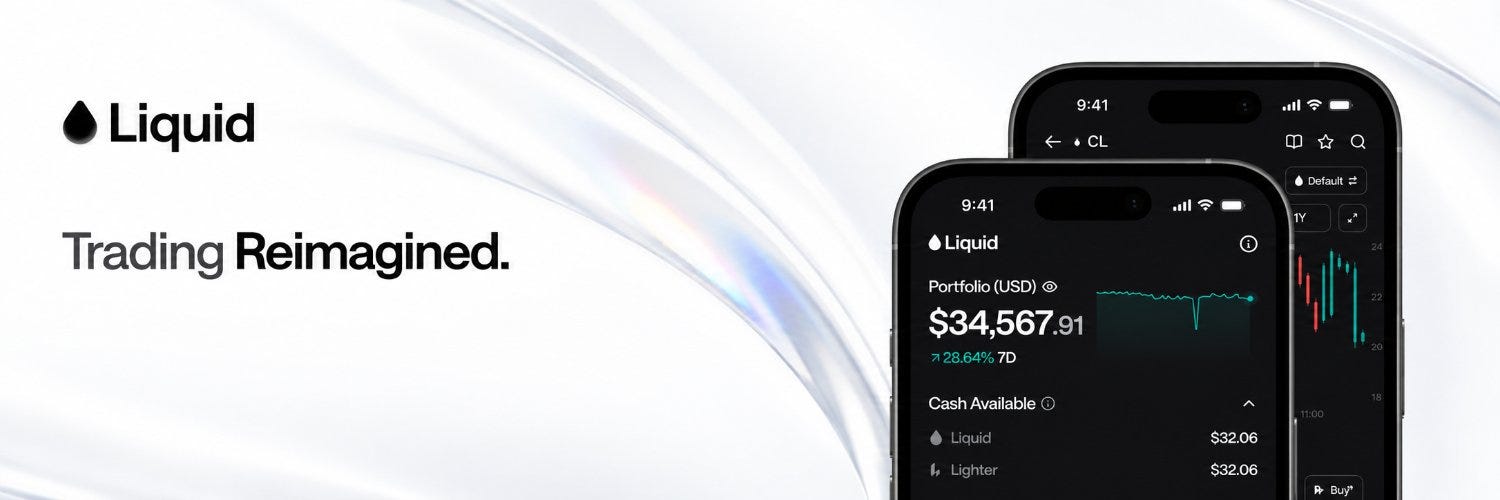
  • Liquid launched Co-Invest, enabling users to trade pre-IPO assets — including Anthropic and OpenAI shares — directly through Claude and ChatGPT without leaving the chat interface.

Raises💰

  • Otomato raised $2M led by Improbable to build a cross-chain portfolio monitoring tool that auto-detects positions across lending, LPs, perps, and more — alerting users to every event linked to their exposure across Ethereum, Base, Arbitrum, HyperEVM, and beyond.

News🗞️

  • Base launched Base MCP, allowing AI agents to connect to a user’s Base Account and execute onchain actions — swaps, transfers, portfolio tracking — across Morpho, Moonwell, Uniswap, Aerodrome, and others. Transactions require explicit user approval before anything moves.


For sponsorships, questions, or news tips, reach us at: support@todayindefi.com


Earn up to 20.91% Fixed APY

Subscribe for daily free DeFi news covering launches, tradable catalysts, and actionable farming opportunities.

DeFi📈

Image
  • Morpho released the upcoming Morpho Midnight whitepaper, a protocol for fixed-rate, fixed-term lending where interest rates emerge from trading prices rather than utilization curves.

  • Morpho launched on Kaia Chain, with Featherlend curating vaults and Redstone providing oracles.

  • Exponent, a yield trading protocol, launch v2 on Solana with a hybrid liquidity engine combining an interest-rate order book and a Rate CLMM, alongside Strategy Vaults and risk-tranching swaps, backed by a $200K+ rewards campaign at launch.

  • Aave Labs submitted a Temp Check to deploy Aave V4 on Avalanche with a dedicated RWA Liquidity Hub, backed by up to $15M in incentives from Avalanche tied to TVL and revenue KPIs.

  • Sei published the Giga Roadmap, a multi-phase plan targeting 200,000 TPS and sub-400ms finality through Autobahn parallel consensus and a rebuilt execution client.

  • Monad v0.14.4 fixes a gas estimation bug that was causing developer transactions to fail, adds overflow protection in gas pricing, and advances groundwork for deterministic raptorcast and zkVM.

  • Base deployed the Azul upgrade on mainnet — its first independent hard fork — bringing multiproofs that could cut Ethereum withdrawal times from 7 days to 1, testnet peaks of 5,000 TPS, and 99% fewer empty blocks.

  • Babylon Labs submitted a proposal to Aave DAO to integrate Trustless Bitcoin Vaults with Aave V4, which would allow native BTC to be used as collateral and introduce two new Spokes — one for borrowing against BTC and one for post-liquidation settlement.

  • Euler Finance launched on HyperEVM, bringing modular lending to the Hyperliquid ecosystem with composable collateral and configurable vault parameters.

  • Pump.fun’s mobile app now supports trading on Ethereum, Base, and BNB Chain alongside Solana, using a single wallet with gas fees covered by the platform.

  • TermMax launched App V2, consolidating fixed-rate borrowing and lending across all supported chains into a single interface with unified order routing, multichain market views, universal limit orders, and a unified dashboard.

  • Superform launched SuperformOS, an operating system for programmable vaults that brings strategy rules, execution logic, and audit history fully onchain — giving curators verifiable infrastructure and users transparency into how their capital is being managed.


Find and execute the 15%+ stablecoin yields in minutes
Save time without checking every protocol manually. DeFi Saver’s Discover page surfaces rates across Aave, Morpho, Spark, and more, lets you simulate leverage before committing, and handles the full loop in one click. Stop leaving yield on the table.

<Discover Yields on DeFi Saver> | Today in DeFi is Supported by DeFi Saver


Issues⚠️

  • Fluid lost 125K FLUID and 51.9K GHO after a compromised key allowed an attacker to drain Merkle reward distributors using empty-proof claims, swapping funds and routing ETH into Tornado Cash. Merkle reward claiming is temporarily paused; the core protocol and smart contracts are unaffected.

  • Gravity Bridge Gravity Bridge’s $5.4M exploit appears to have involved worthless tokens minted on the Cosmos side being mistakenly processed as legitimate ERC-20 withdrawals on Ethereum. Suggesting a validation flaw rather than a key or validator compromise.

  • Zama, a privacy-focused chain cUSDC wrapper on Ethereum locked $12.6M in user funds after Circle blacklisted the contract due to a court-ordered restraining order targeting an external depositor. All pooled contract depositors are frozen despite Zama not being a defendant, creating collateral damage in DeFi compliance enforcement.

  • Alephium’s bridge lost $815K after a backend flaw allowed forged messages to bypass its guardian network. The bridge is shut down and ALPH holders on Uniswap and PancakeSwap are urged to withdraw liquidity immediately.

  • Sui mainnet restored after epoch halt triggered during a long-term fix rollout when validators restarted with a new binary. Transactions are now flowing normally, though the incident exposed vulnerabilities in randomness initialization at epoch boundaries.

  • Resolv has published its full recovery framework following the March 22 exploit, with pre-incident USR holders recovering 1:1 in USDC and post-incident USR holders recovering at 0.5 USDC per USR. RLP holders recover at 0.71 USDC per RLP, with a RESOLV token allocation bringing total recovery to 60%+. The Foundation has allocated 10% of total RESOLV supply for recovery, with 70% of that going to affected RLP holders. Eligible users have until August 26 to claim via the Resolv app.

  • Stake DAO was exploited on Arbitrum after an attacker minted 5.4 trillion vsdCRV and swapped them for ETH. The team contained the damage by securing mainnet backing and closing the bridge — core products were unaffected, but the Arbitrum asdCRV Llamalend market is being sunset.

  • Ventuals reported an oracle malfunction on its SPACEX pre-IPO market that caused erroneous price movements and triggered user liquidations. The team says it has addressed the issue and is assessing compensation for affected users.

  • Withdrawals for Upshift’s Resolv Maxi USR vault are now open following the March 22 security incident that forced Resolv to pause operations. Users can claim via the Recovery Portal on Resolv.

  • New Market Trading was exploited for approximately $3M on May 25. The vulnerability was in their SquidRouter integration — an authorization flaw allowed anyone to impersonate a permissioned delegate and drain user wallets. Squid Router itself was not affected; the bug was in New Market Trading’s own module wrapping the integration.

  • Bitmor’s DCA V1 contract was exploited for 5,909 USDC after the executor wallet was compromised. Users with active approvals should revoke immediately at revoke.cash and withdraw any remaining cbBTC.

Stablecoins/RWA🪙

Image
  • Falcon Finance launched fUSD, a GENIUS Act-compliant stablecoin issued through Anchorage that passes yield back to qualifying institutional holders at a target rate of ~3% annually.

  • Alongside the exploit recovery, Resolv has announced Vault Street, a new business line focused on distributing tokenized RWAs for institutional allocators, with its first product primeUSD, a leveraged tokenized T-bill strategy launching in public beta in June.

  • Neutrl, a stablecoin protocol earning yield from OTC acquired altcoin basis trade, added on-chain visibility to its OTC and Liquid Reserve allocations, with each position showing notional size, duration, vesting terms, and status — though counterparty and token names remain redacted.

  • SoFi launched SoFiUSD, claiming to be the first stablecoin issued by a U.S. national bank, redeemable 1:1 for cash and designed for 24/7 transfers.

  • Frax Finance’s frxUSD caps on Aave V4 filled quickly after launch, and now prompts LlamaRisk to propose doubling the limit from $10M to $20M.

  • Native Markets is sunsetting USDH — it will unstake its HYPE tomorrow, disabling new market creation and AQA benefits. Existing HIP-3 markets remain operational, HIP-1 spot markets will be removed, and users can still convert USDH via the HyperCore USDH/USDC order book.

Prediction Markets

  • Hyperliquid’s upcoming HIP-4 update removes the need for external oracles on prediction markets — the chain’s 24 validators now handle deployment and settlement natively through on-chain vote, with no third-party dependencies.

  • Praxis Protocol, a native prediction market on Base, is opening its testnet on Base in June for waitlist users, featuring PT/YT vault mechanics, stable and elevated pool systems, principal-safe predictions, and yield games.

Perps DEX📉📈

Image
  • Liquid launched Co-Invest, enabling users to trade pre-IPO assets — including Anthropic and OpenAI shares — directly through Claude and ChatGPT without leaving the chat interface.

Raises💰

  • Otomato raised $2M led by Improbable to build a cross-chain portfolio monitoring tool that auto-detects positions across lending, LPs, perps, and more — alerting users to every event linked to their exposure across Ethereum, Base, Arbitrum, HyperEVM, and beyond.

News🗞️

  • Base launched Base MCP, allowing AI agents to connect to a user’s Base Account and execute onchain actions — swaps, transfers, portfolio tracking — across Morpho, Moonwell, Uniswap, Aerodrome, and others. Transactions require explicit user approval before anything moves.


For sponsorships, questions, or news tips, reach us at: support@todayindefi.com


Earn up to 20.91% Fixed APY

from Apyx’s apyUSD and apxUSD on Pendle

Pendle Finance provides maturity pools for Apyx’s yield-bearing stablecoins, apyUSD and apxUSD. By purchasing PTs on Pendle, users can lock in attractive fixed yields regardless of market volatility.

Apyx Protocol Overview: apyUSD vs. apxUSD

Apyx Finance utilizes Real-World Assets (RWA) to back a dual-asset synthetic dollar system.

1. Backing & Reserve Breakdown

Based on current protocol data, the Apyx reserves total $515.54M and are composed of a mix of “Digital Credit” instruments (Bitcoin-backed preferred shares) and cash:

  • STRC (57.17%): Strategy Stretch Preferred Stock. A perpetual preferred share (Nasdaq: STRC) issued by Strategy Inc, yielding ~11.5% and backed by their Bitcoin treasury.

  • Cash & Equivalents (39.91%): Highly liquid fiat-denominated reserves used for immediate redemptions and peg maintenance. (Note: USDC and Cash have been consolidated into this category based on the latest dashboard).

  • SATA (2.91%): Strive Preferred Series A. A liquid preferred equity (Nasdaq: SATA) yielding ~12.75%, backed by Bitcoin and cash reserves.

  • Other (<0.01%): Miscellaneous dust/assets.

2. Asset Roles

  • apxUSD (Liquidity Layer): A non-yield-bearing synthetic dollar designed for deep DeFi integration. It is the primary liquidity vehicle of the protocol, with a current circulating supply of $512.16M.

  • apyUSD (Savings Layer): A yield-bearing, non-rebasing asset. It captures 100% of the dividend income generated by the STRC and SATA holdings. As these dividends accrue, the exchange rate of apyUSD increases relative to apxUSD.

3. Sources of Yield & Incentives

The total yield of the Apyx ecosystem is derived from DAT dividends. However, the market value of these tokens on Pendle is influenced by two distinct factors:

  • Organic Yield: 100% of DAT dividends are directed to apyUSD. Currently, this is ~11.58%.

  • apxUSD: Functions as the protocol’s primary liquidity layer with 0% organic yield.

  • Airdrop Incentives: The protocol distributes “points” toward a future airdrop. apxUSD is assigned a higher multiplier than apyUSD to incentivize liquidity in the non-yield-bearing asset.

Understanding PTs (Principal Tokens)

On Pendle, a yield-bearing token is split into a Principal Token (PT) and a Yield Token (YT). When you buy a PT, you are purchasing the underlying asset at a discount. At maturity, 1 PT is redeemable for 1 unit of the underlying asset, effectively locking in a Fixed APY.

Available Tenors & Fixed APY Rates

There are currently two maturity dates available for Apyx assets on Pendle, catering to both short-term and medium-term strategies.

1. Short-Term Tenor: 18 Jun 2026 (22 Days)

This tenor is ideal for users looking to lock in high yields over a short duration.

2. Medium-Term Tenor: 05 Nov 2026 (162 Days)

This longer tenor provides a balanced approach to lock in solid fixed yields over roughly five months.

Strategy Comparison

  • Maximum Yield (Short-Term): The 18 Jun 2026 pool for apyUSD offers a 20.91% Fixed APY, which is an excellent opportunity for short-term capital parking to maximize returns.

  • Duration Extension (Medium-Term): For those looking to avoid frequent reinvestment risk and secure rates for a longer term, the 05 Nov 2026 pools still offer strong double-digit yields (16% for apyUSD and 12.15% for apxUSD) locked in for over five months.

Step-by-Step Guide to Locking Yield

  1. Acquire Assets: Mint apyUSD or apxUSD at apyx.fi or swap for them on a DEX.

  2. Access Pendle: Navigate to the Pendle Finance dashboard and locate the Apyx vaults (Expiry: 18 Jun 2026 or 05 Nov 2026).

  3. Select Principal Token (PT): * Choose PT-apyUSD if you want to capture a fixed rate that outperforms the current organic dividend rate.

    • Choose PT-apxUSD if you want a fixed rate on a stable liquidity token with 0% organic yield.

  4. Confirm the Swap: Exchange your tokens for PT. The discount you receive at purchase represents your guaranteed yield.

  5. Hold to Maturity: Wait until maturity to redeem your PT 1:1 for the underlying asset.

Risk Warnings

  • Operational Warning - Restricted Liquidity: Direct minting and redemption of apxUSD/apyUSD via the Apyx protocol are currently unavailable. Users must rely on secondary market liquidity (e.g., DEXs) for entry and exit.

  • Unstaking Period: Moving from apyUSD to apxUSD via the protocol vault requires a 30-day unstaking period. Plan your liquidity needs accordingly.

  • RWA/Digital Credit Risk: Over 60% (57.17% STRC + 2.91% SATA) of the backing is tied to off-chain assets. Any default or reduction in dividends from these off-chain entities will directly impact the value of apyUSD.

  • Airdrop Expectations: The high PT yield is a byproduct of point-farming demand. If point value expectations drop, the PT/YT spread may narrow.

  • Peg Stability: While supported by cash equivalents, a major market dislocation could lead to a depeg. PT holders are effectively exposed to this risk until maturity.

  • Smart Contract Risk: Using these tokens on Pendle introduces nested risks across both the Apyx and Pendle protocol layers.


Follow @todayindefi to keep up with the latest DeFi news on Twitter.

Disclaimer: Projects or tokens mentioned in this newsletter are often experimental or unaudited. Do your own diligence before using or buying anything mentioned.

© 2026 𝕯𝖆𝖓𝖌𝖊𝖗 · Privacy ∙ Terms ∙ Collection notice
Start your SubstackGet the app
Substack is the home for great culture