

Subscribe for daily free DeFi news covering launches, tradable catalysts, and actionable farming opportunities.
Today’s News Headlines:
- Gauntlet Raises $125M for TradFi Expansion
- Ethena Eliminates USDe Mint and Redeem Fees
- GROVE Rewards offers 14% APR on sUSDS
- Aave Proposes Standardized Asset Listing Framework
- KPK Adds Nexus Mutual Insurance to Vaults
- Pharos Launches RockawayX RWA Vault
- Rysk Brings Covered Calls to wstETH

Find and execute the 15%+ stablecoin yields in minutes
Save time without checking every protocol manually. DeFi Saver’s Discover page surfaces rates across Aave, Morpho, Spark, and more, lets you simulate leverage before committing, and handles the full loop in one click. Stop leaving yield on the table.
<Discover Yields on DeFi Saver> | Today in DeFi is Supported by DeFi Saver
TL;DR
Most DeFi “market-neutral” yield — basis trades, lending loops — is crowded and secretly correlated. Options premium is one of the few onchain return drivers that’s genuinely different, and it remains under-farmed.
Three ways to earn on Panoptic: deposit into a vault (passive), hedge an existing Uniswap LP’s delta while collecting a second fee stream (the highest-utility play for most DeFi users), or run self-directed options strategies.
Under the hood: Panoptic turns Uniswap liquidity into perpetual options — no expiry, no oracle, any Uniswap-listed asset, premiums streaming continuously instead of paid upfront.
V2 launched June 2026 and TVL is early-stage small — size accordingly.
In this guide: 1. Why this matters now · 2. How to make money on Panoptic · 3. How it works · 4. Risks
1. Why This Matters Now
A lot of “market-neutral” yield in DeFi converges on the same handful of trades. Basis trades went mainstream once products packaged them into one-click yield, and lending loops across Aave, Morpho, and Euler are well-trodden ground. The problem isn’t just compressed spreads — it’s correlation. When funding flips negative or lending utilization drops, most of a “diversified” book turns out to be exposed to the same driver.
Options premium is structurally different: compensation for underwriting realized volatility, a factor that doesn’t move in lockstep with funding rates or lending spreads. Builders across the onchain options space agree it’s under-farmed — a July 2026 Castle Labs/Block Scholes report, which interviewed Panoptic’s founder alongside teams at Rysk, GammaSwap, and Derive, found that volatility-selling only struggled in 2023–2024 because basis trades and double-digit stablecoin yields paid more for less effort. That’s now inverted: yield meaningfully above the mid-single digits is hard to find without looping, and volatility remains one of the last onchain yield sources that hasn’t been fully farmed.
This isn’t a claim that Panoptic yield is “better” than a basis trade — it carries its own risks (Section 4) on smaller, younger infrastructure. But for genuinely diversifying a market-neutral book rather than spreading the same bet across more venues, it’s one of the few corners of DeFi where the return driver is actually different.
What Panoptic is, in one paragraph: a permissionless options protocol built directly on Uniswap v3/v4 — it repurposes Uniswap liquidity positions as the options themselves. No expiry (positions are perpetual), no price oracle (so any Uniswap-listed asset works, including long-tail tokens no other venue can list), non-custodial, and up to four option legs in a single transaction. Built by physicist-turned-founder Guillaume Lambert, backed by Uniswap Labs Ventures, Coinbase Ventures, and Jane Street; relaunched as V2, “The DeFi Yield Platform,” in June 2026.
2. How to Make Money on Panoptic
Three paths, in rough order of effort.
2.1 Deposit into a vault (passive)
V2’s headline feature is a vault layer: deposit into a strategy, let automation handle the strikes, hedging, and rebalancing.
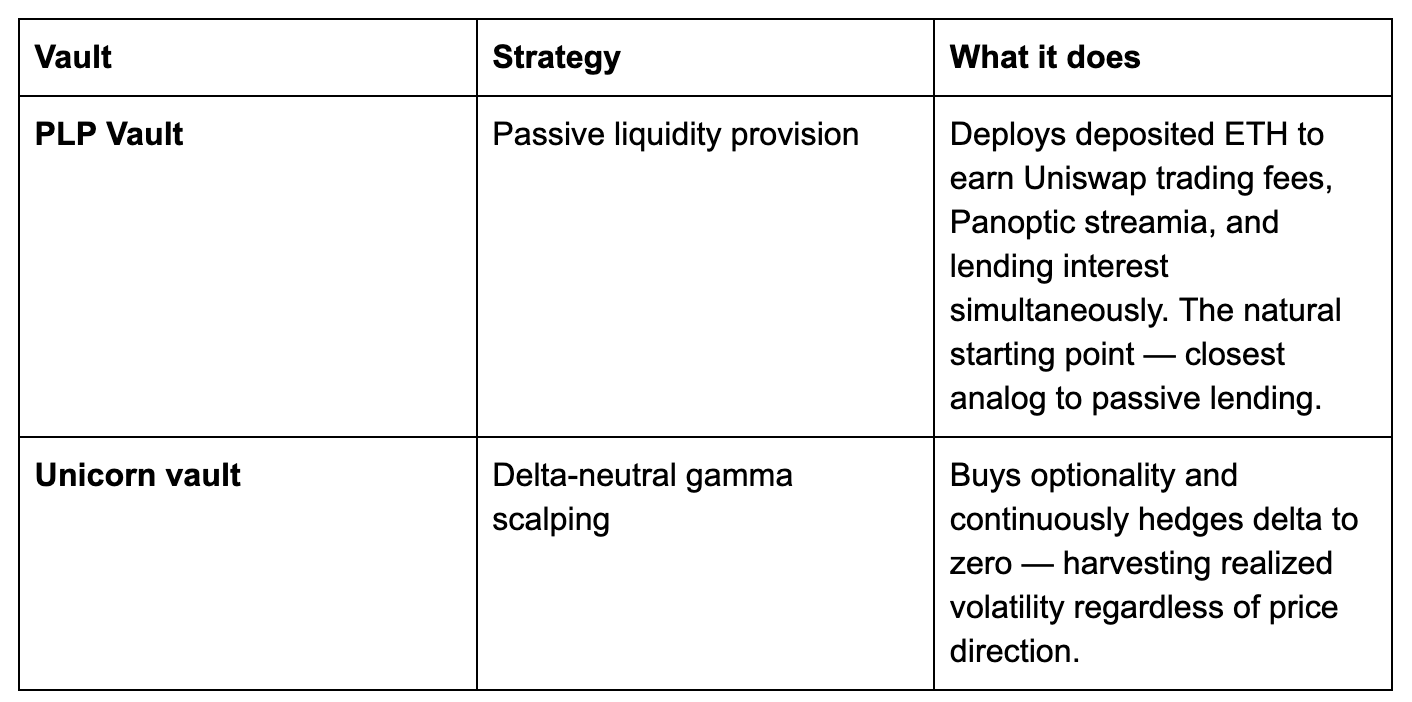
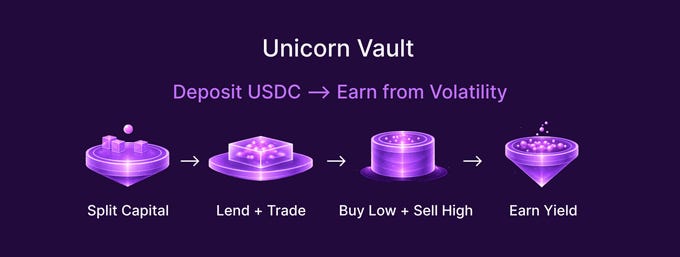
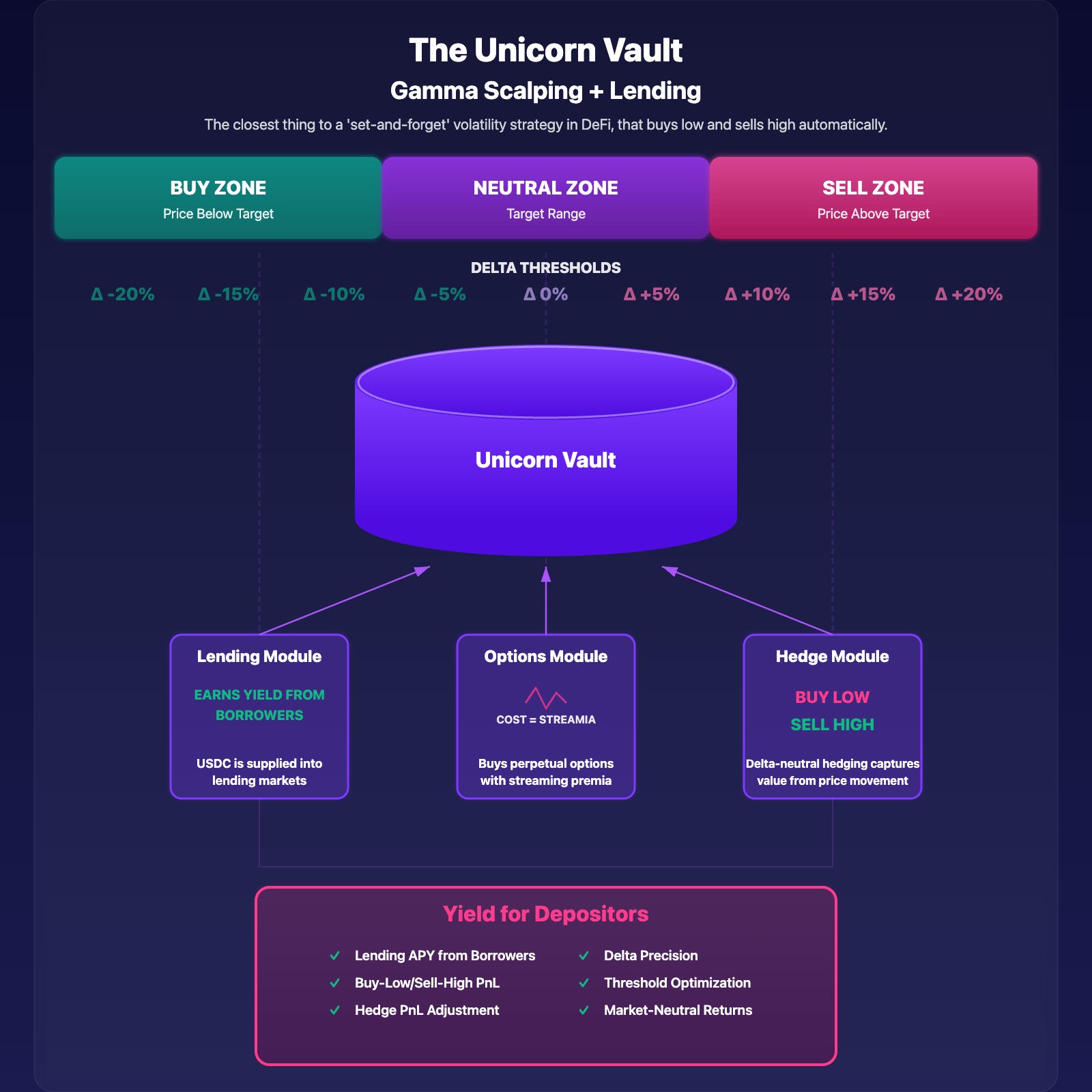
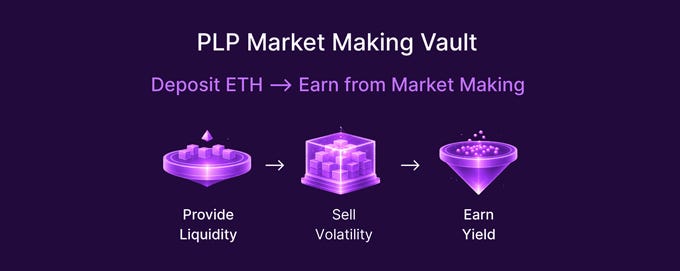
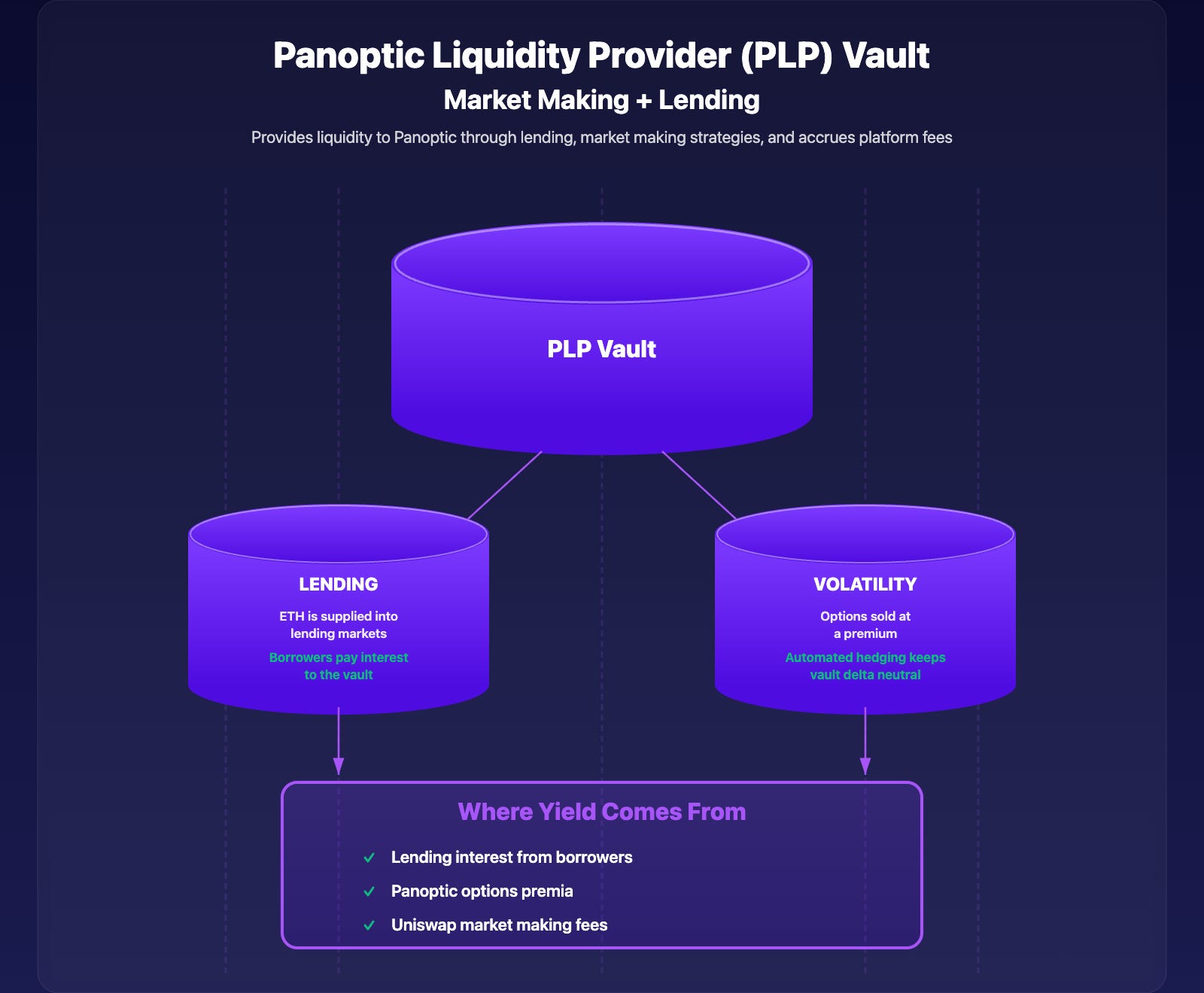
Live markets currently cover ETH and SPCX (a tokenized SpaceX-tracking instrument); the lineup is a snapshot and will evolve. Check APYs in-app — they move with utilization and realized volatility.
2.2 Hedge your existing Uniswap LP (the highest-utility play)
If you take one strategy from this guide, take this one. It requires no capital migration — just an offsetting position against exposure you already have. Panoptic has written about this setup themselves; the figures below are from their published example.
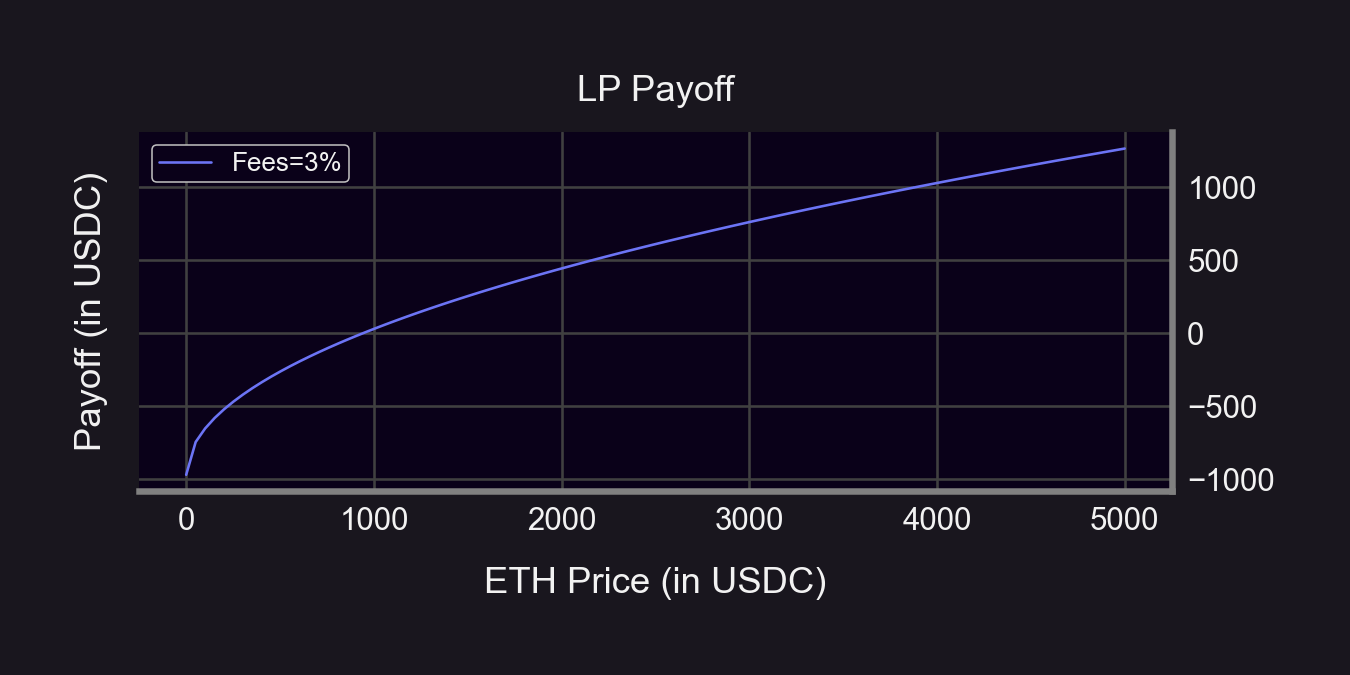
The problem: a Uniswap LP position centered on current price is roughly half base asset, half quote asset — a hidden directional bet, not a neutral one. An ETH/USDC position centered near $2,642 (range ~$2,080–$3,361) carries a delta of about +0.47: a 1% ETH drop costs about -0.49%, unhedged, on top of the IL you already expect.
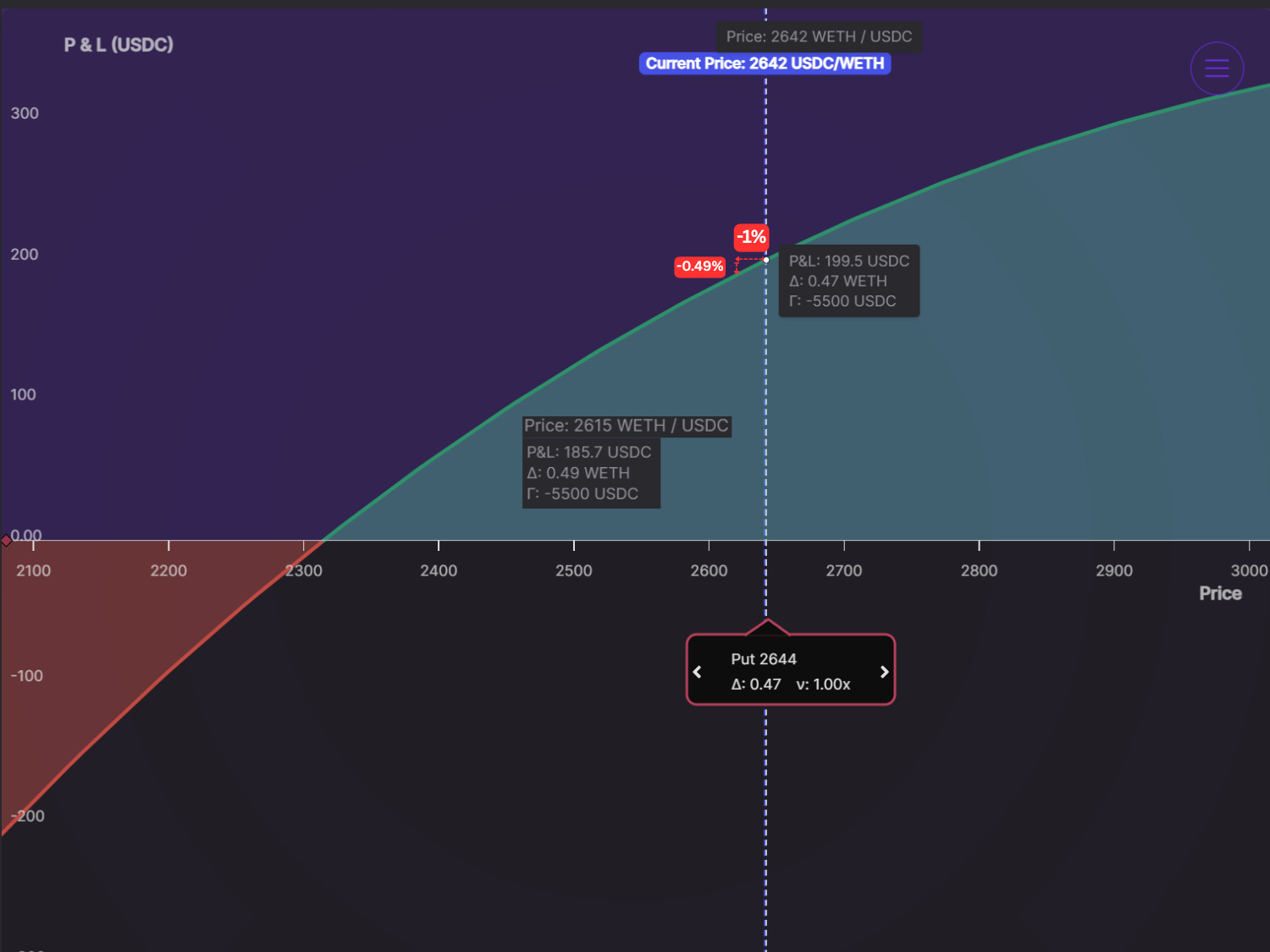
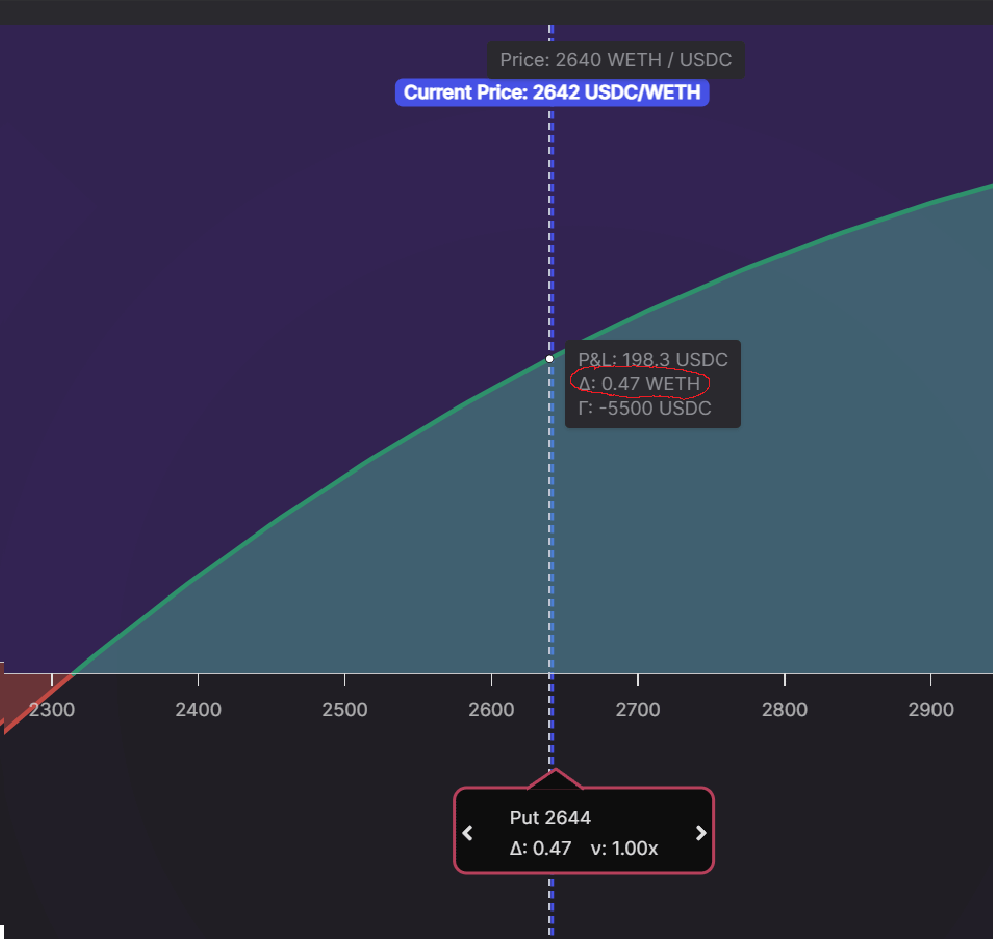
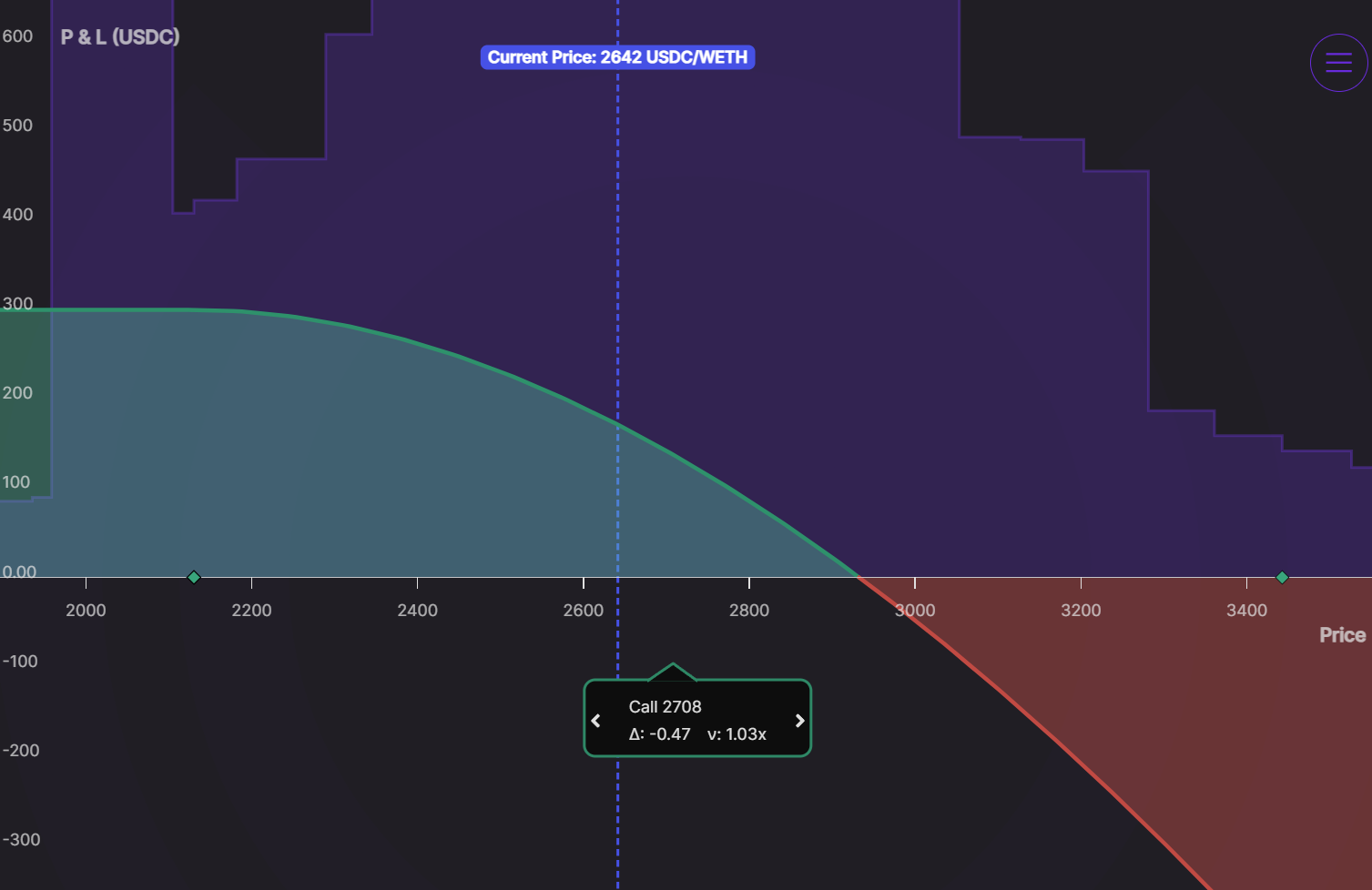
The fix: sell a Panoptic perpetual call sized so its negative delta offsets the LP’s +0.47.
Re-run the same 1% drop: the loss shrinks to about -0.02%. Roughly 95% of near-term price sensitivity, gone.
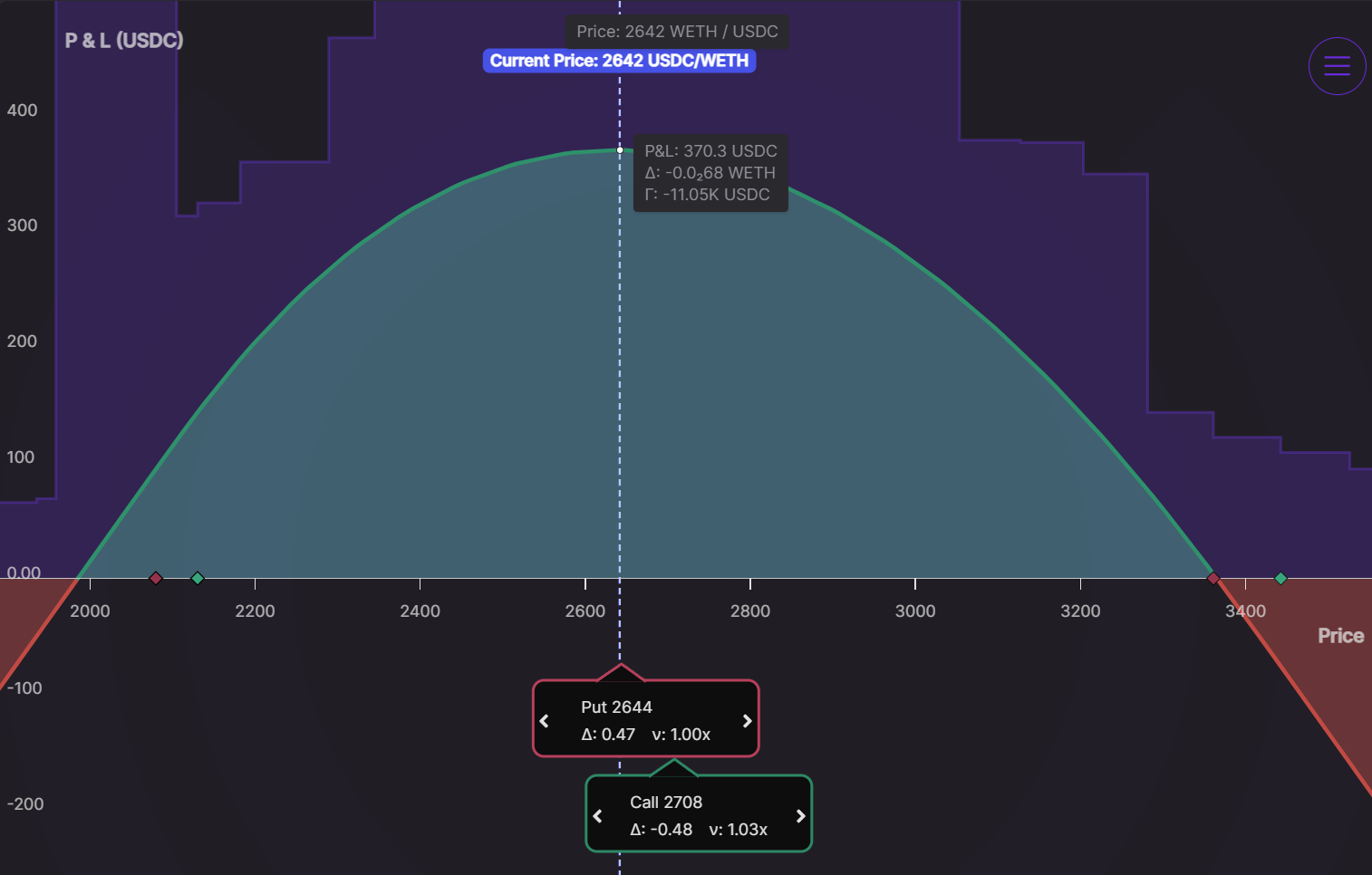
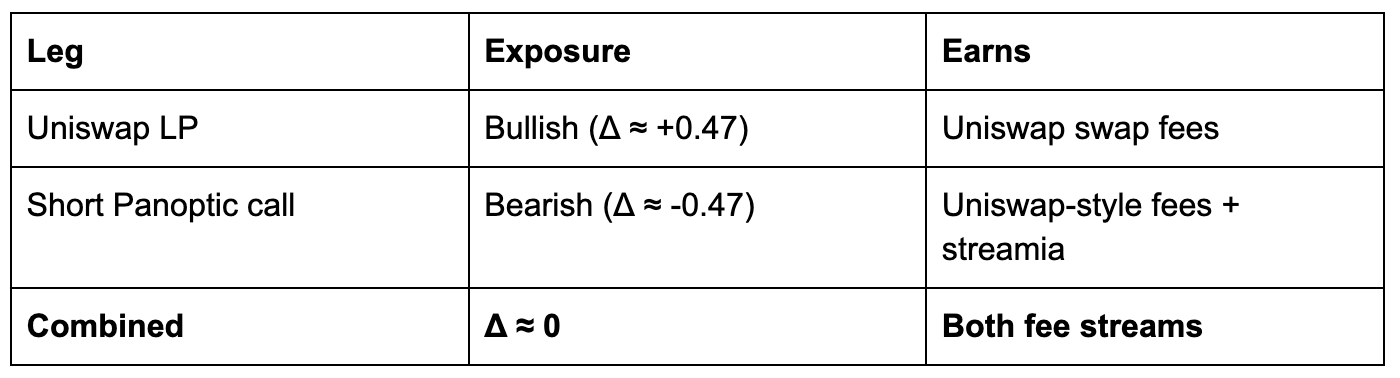
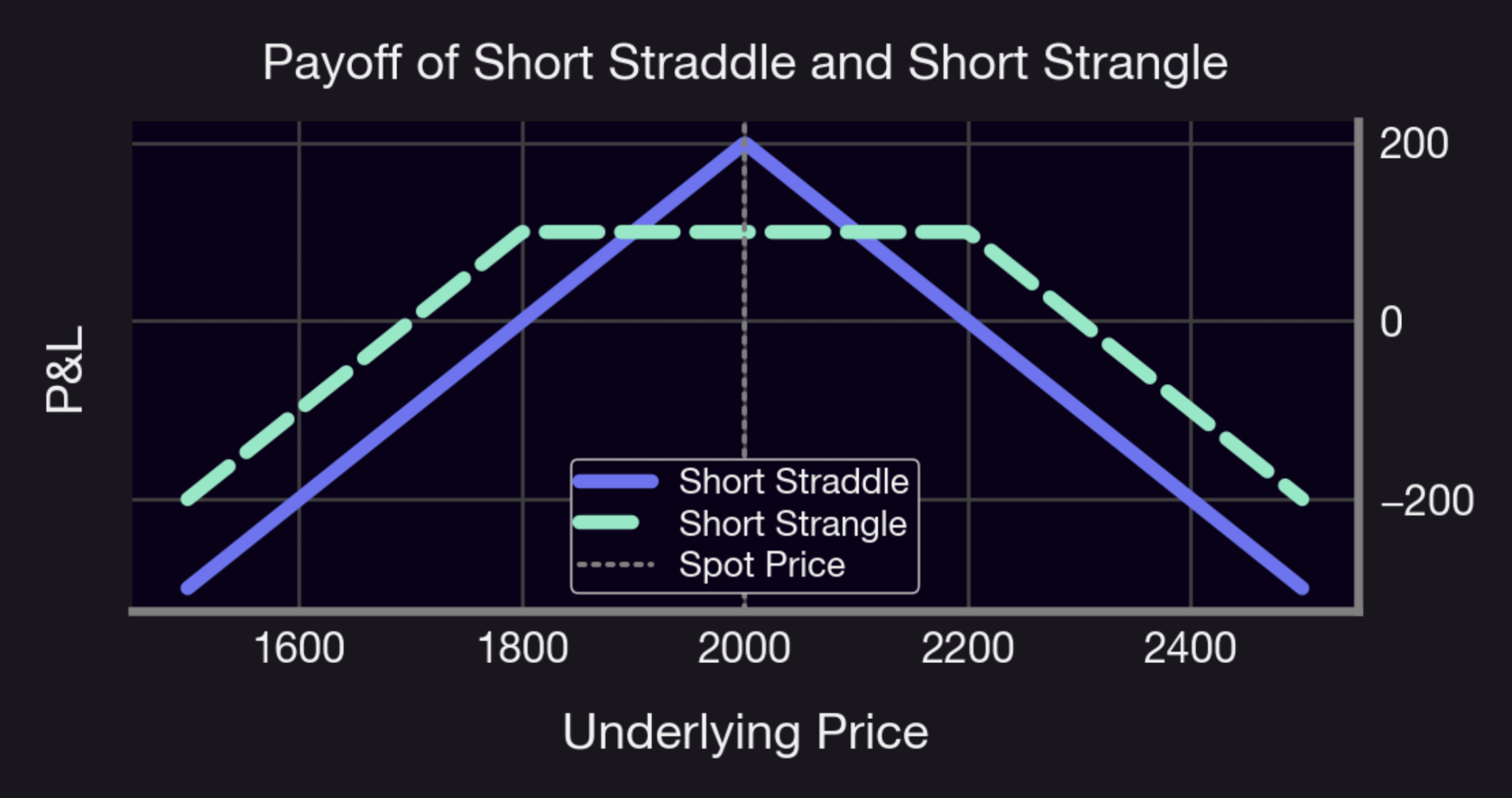
And the hedge pays you. The short call earns Uniswap-style fees on the borrowed liquidity plus streamia, stacked on what the LP already earns. The combined structure is functionally a short straddle collecting fees from both sides:
Two caveats. The short call caps upside — a hard rally eats into gains the naked LP would have kept. And delta drifts as price moves, so staying neutral means periodically adjusting the LP range and the call; the app displays net delta so the drift is visible. The app also packages this whole structure as a one-click “Delta-Neutral Uniswap LP” flow under the Provide Liquidity tab.
2.3 Run your own strategies (self-directed)
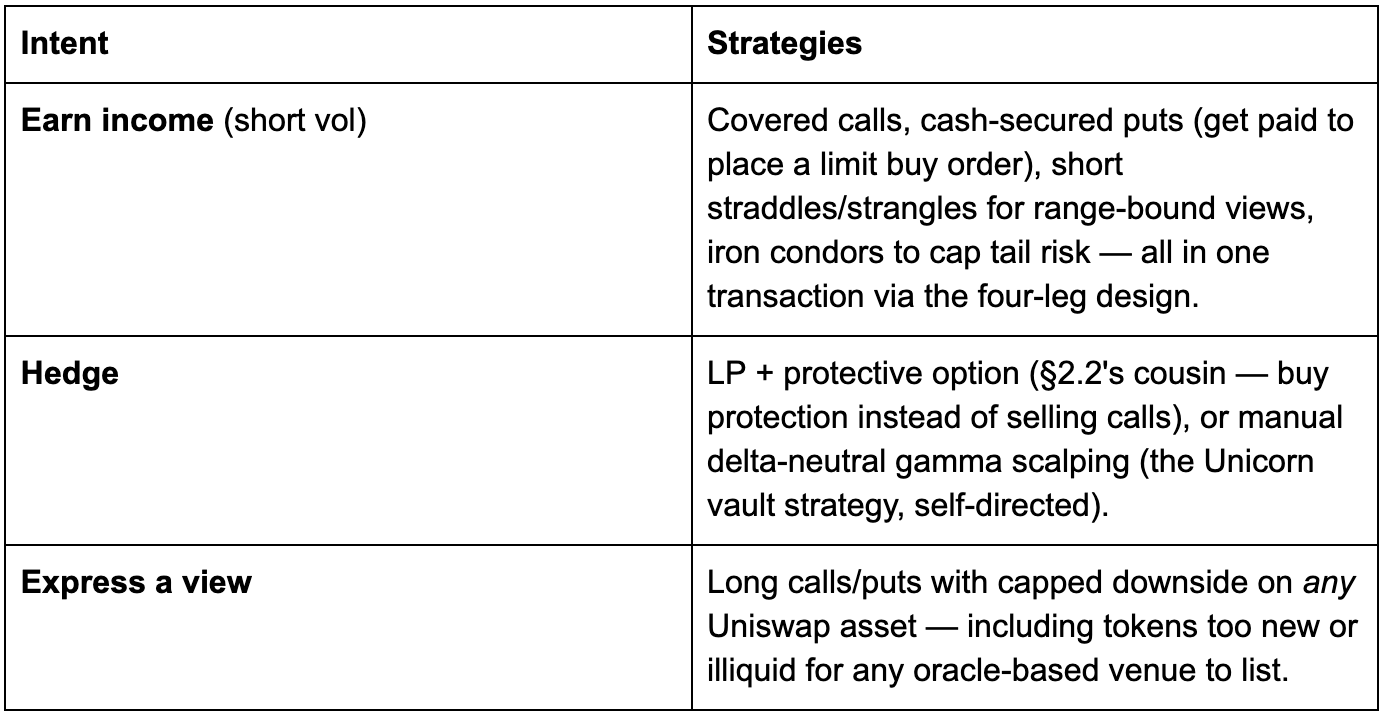
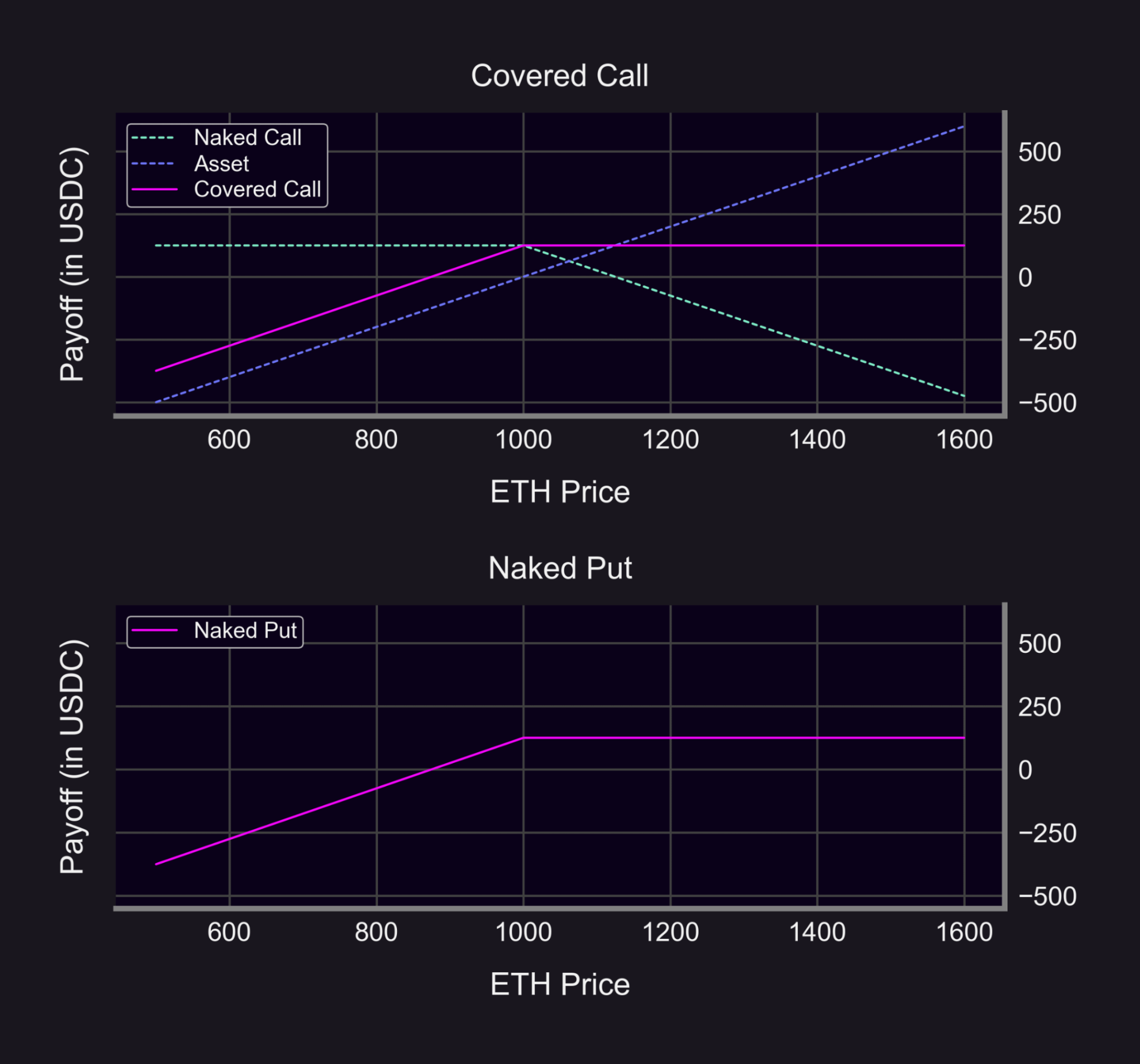
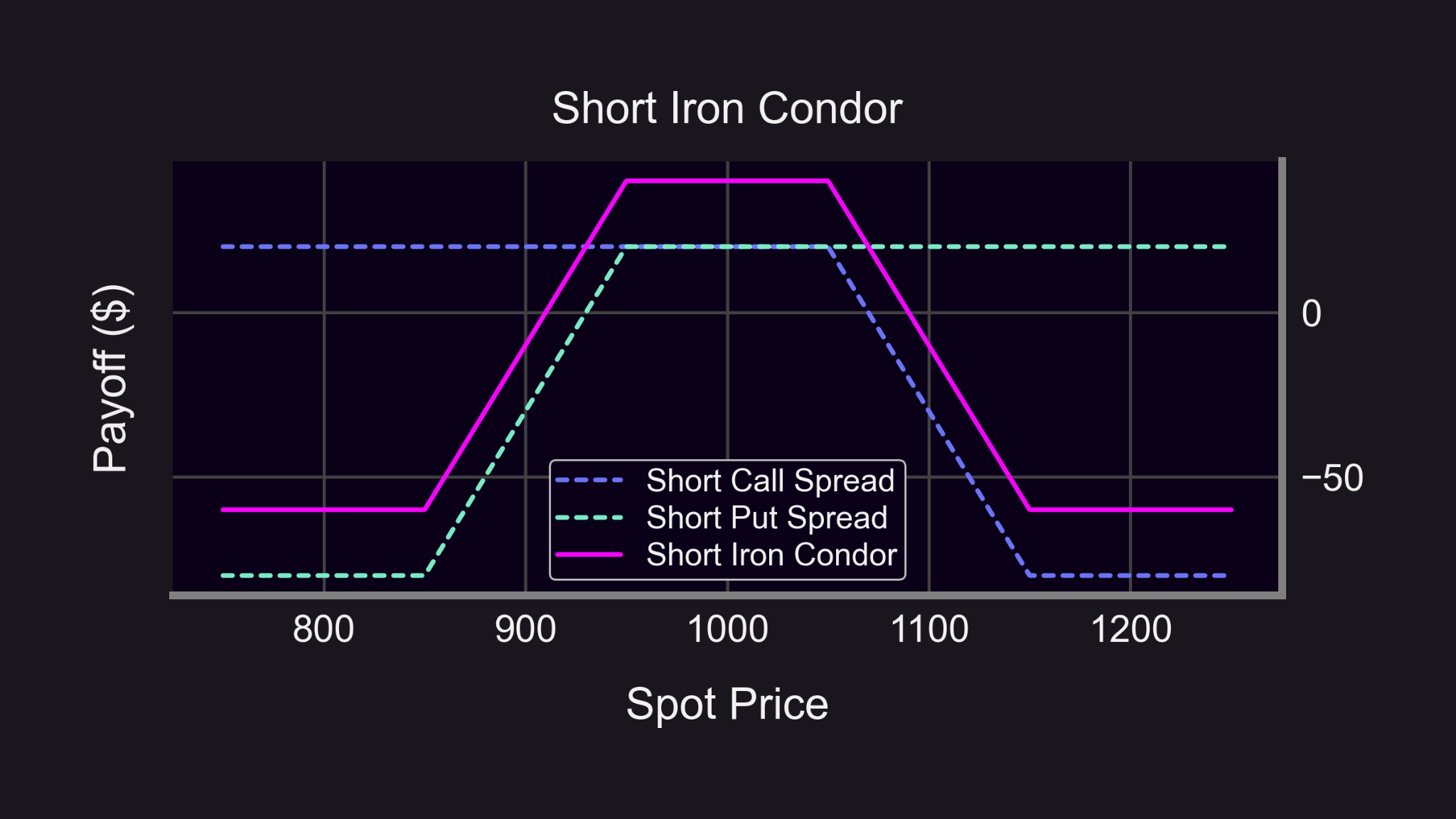
The multi-leg, no-expiry structure supports the full options toolkit:
Gamma Scalping
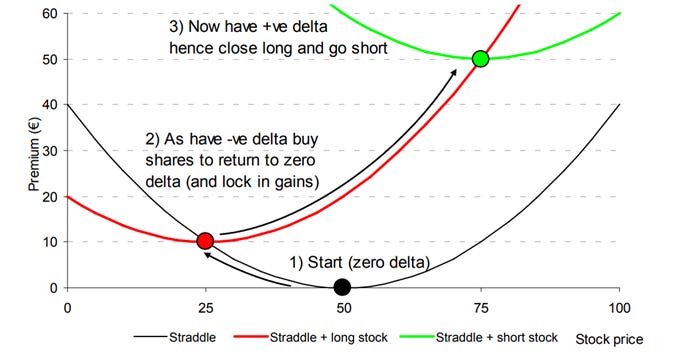
What you’re actually earning, in all three paths: some mix of three stackable income layers — commissions (fees when positions open/close), interest (sellers pay ongoing interest on borrowed liquidity; passive depositors collect it), and streamia (the streaming options premium itself, earned by whoever writes the option). Backtests by Panoptic and Block Scholes modeled meaningfully positive annualized returns for premium-selling and gamma-scalping in volatile pools — simulations, not realized returns, but directionally encouraging.
3. How It Works
Enough detail to understand what you’re holding; skip to Section 4 if you just want the risk picture.
LPing is already selling an option. A concentrated Uniswap LP position has the payoff of a short put (or short straddle for a two-sided range): it earns fees in range and suffers “assignment” — impermanent loss — when price moves through. Millions of LPs are already selling options without collecting an options premium. Panoptic formalizes this and builds the missing other side: being long that option, by borrowing and removing pooled liquidity instead of adding it.
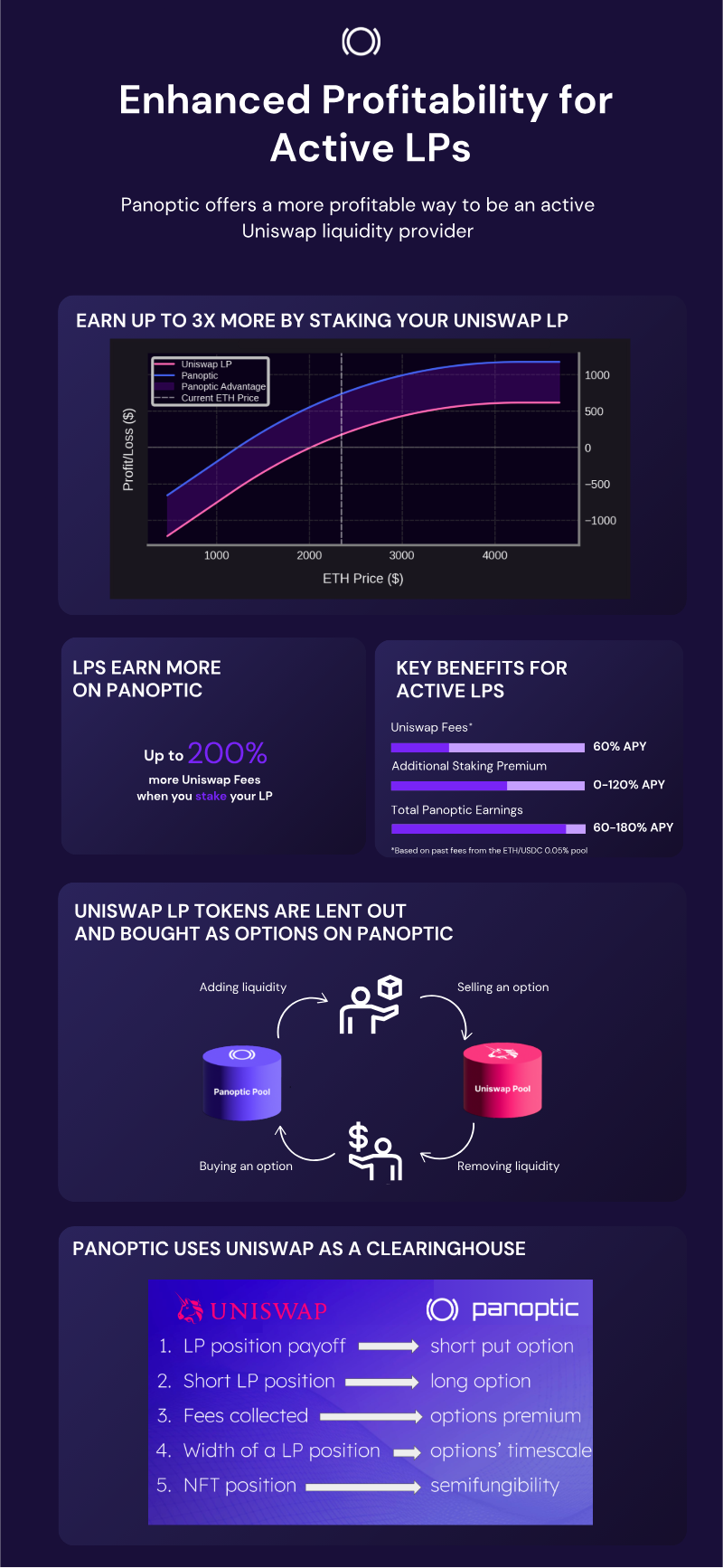
Three roles, one pool. Passive depositors supply collateral vaults and earn commissions plus interest. Option sellers borrow that liquidity and deploy it into Uniswap near current price (that is a short option) — up to ~5x notional against posted collateral. Option buyers borrow liquidity and remove it (that is a long option), posting only ~10% of notional. Everyone draws from and returns to the same collateral pool, so the system stays fully collateralized without a central counterparty.
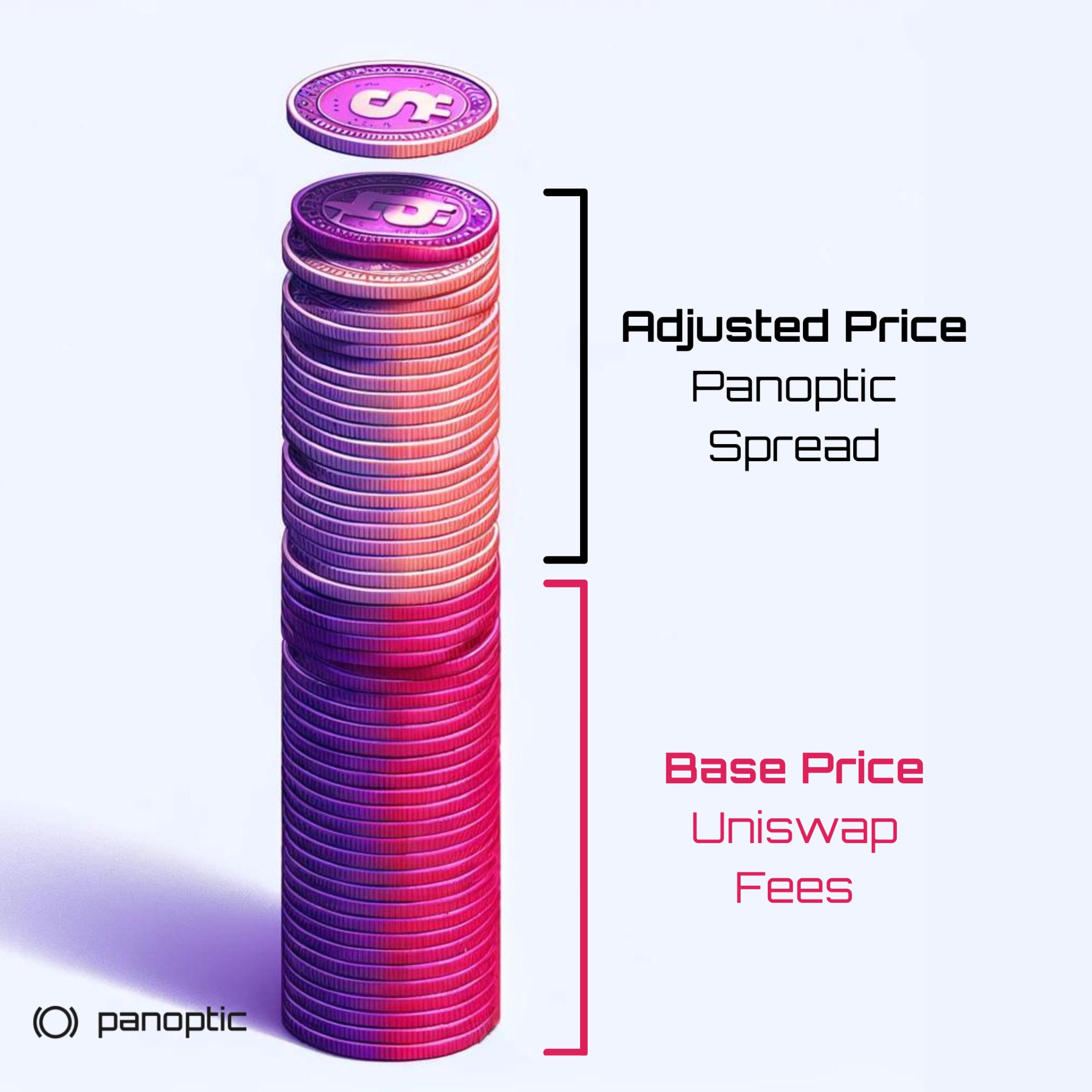
Streamia: premium that streams. Instead of an upfront Black-Scholes premium priced off an oracle, buyers pay block-by-block: the Uniswap swap fees the borrowed liquidity would have earned, scaled by a utilization spread. Over time this converges on average to fair option value — priced by real trading activity in the pool, not a model. That’s the mechanical reason Panoptic needs no oracle and can list options on anything with a Uniswap pool.
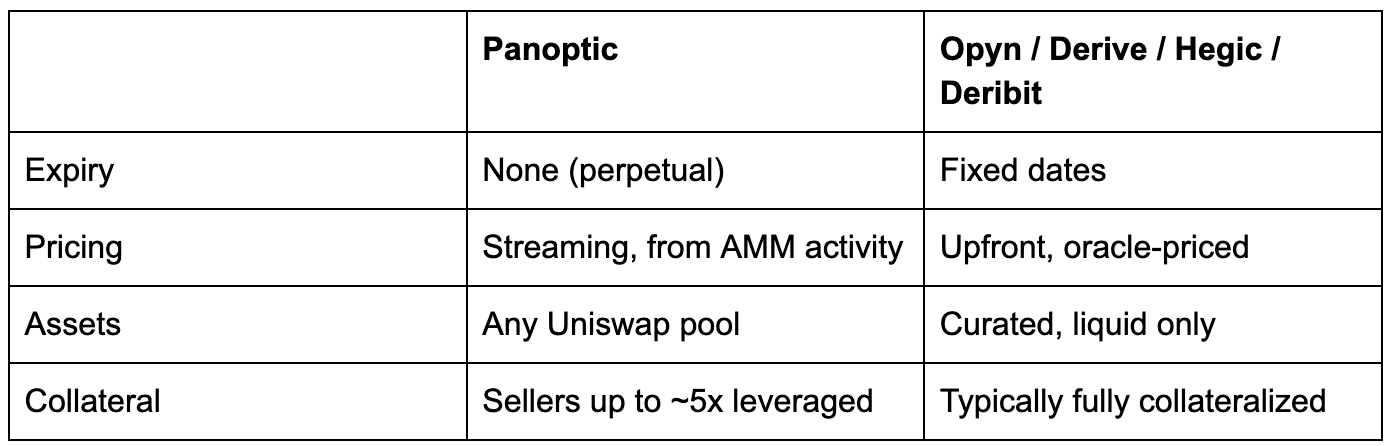
Versus familiar venues:
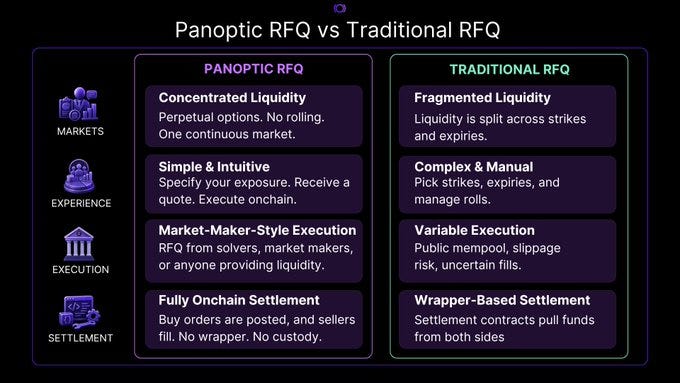
4. Risks
None of the yield above is free — it’s compensation for specific, identifiable risks:
Liquidation risk. Sellers running undercollateralized positions (up to ~5x) can be liquidated on adverse moves. Passive vault depositors don’t carry this directly.
Streamia mispricing. Premium derives from realized pool activity, not a forward-looking vol model — it can lag or diverge from “fair” pricing, especially in thin pools.
Smart contract risk — with a track record to weigh. Extensively audited (ABDK, OpenZeppelin, Code4rena, Certora/Cantina for V1; Obsidian, Nethermind, and another Code4rena competition for V2). One serious incident: an August 2025 position-spoofing vulnerability, responsibly disclosed and resolved via a whitehat rescue securing over 98% of the ~$4M at risk, with a $250K bounty paid. No funds were maliciously exploited — but this is young, complex infrastructure.
Liquidity and scale. V2 tracked at roughly $1.2–1.3M TVL in its first ten days; the protocol has historically sat in the single-digit millions. Large allocations may hit capacity constraints or wider spreads. Check live TVL on DefiLlama before sizing.
Vault execution risk. Vault depositors trust the strategy’s systematic execution — understand strike-selection rules, rebalancing cadence, and fees before allocating.
V2 maturity — per the team itself. The unified engine launched June 2026 and lacks V1’s track record. In the Castle Labs/Block Scholes report, Panoptic’s founder described the institutions he’s targeting as needing a more mature risk-management layer and true portfolio-wide margin — capabilities still being built. Useful honesty when sizing an allocation today.
Sources: Panoptic docs and blog (including their published delta-neutral LP example, which supplies Section 2.2’s figures), the Panoptic/Block Scholes joint research (backtested figures — not realized returns), and “The Renaissance of Onchain Options” (Castle Labs × Block Scholes, July 2026). Figures are time-sensitive; confirm live numbers in-app or on DefiLlama before allocating.