

Subscribe for daily free DeFi news covering launches, tradable catalysts, and actionable farming opportunities.
TL:DR:
Tokenized stocks (xStocks, bStocks, Coinbase’s new Base tokens) can now be used as DeFi collateral, lent against, and traded via basis strategies — not just bought and held.
Why now: The category crossed $3B in August, up from ~$2M a year ago, and Coinbase just launched natively on Base with Aave, Aerodrome, Morpho and Euler live day one.
Best opportunity: Lending USDC into Kamino’s xStocks market — one of the only markets where collateral depth actually covers the debt against it.
Biggest risk: Across the category, ~$111M of tokenized stock sits in DeFi against only ~$20M of liquidity that could actually be sold — 3-5x more collateral than could be liquidated at once.
Who it’s for: DeFi users comfortable with lending/leverage mechanics who want stablecoin yield or equity exposure that isn’t just another loop of crypto collateral.
Today’s News Headlines:
- Ethena governance: fee switch vote passing 13.6M
- Morpho sparks curator vault accountability debate
- Moonwell exploited for $8.7M via MAMO
- Charles Schwab to integrate AVAX on platform
- Spectra Finance launches fixed-income markets for Stellar
- Arcadia adds margin trading on tokenized stocks
- Meridian raises MLP cap to $2.5M USDe

Find and execute the 15%+ stablecoin yields in minutes
Save time without checking every protocol manually. DeFi Saver’s Discover page surfaces rates across Aave, Morpho, Spark, and more, lets you simulate leverage before committing, and handles the full loop in one click. Stop leaving yield on the table.
<Discover Yields on DeFi Saver> | Today in DeFi is Supported by DeFi Saver
Tokenized stocks crossed roughly $3 billion in August 2026, up from about $2 million a year earlier. Most coverage stops at “you can now buy Tesla on-chain” — but for a DeFi user, buy-and-hold is the least interesting thing these assets do.
With equity tokens now accepted as lending collateral, licensed equity perps trading on-chain, and Coinbase entering with a native Base launch, there are three real ways to put them to work: leveraging them, lending stablecoins against them, and trading the basis between the token and the perp. This piece covers how each works, which instruments it uses, and what breaks.
The instruments
“Tokenized stock” is a label that covers legally distinct products that fall into two families.
Wrappers are what you can actually trade. The issuer — typically an offshore entity — holds the real shares at a custodian (almost always Alpaca Securities) and owes you the price performance. You are a creditor or beneficiary, not a shareholder. Real-share products (Dinari US, Superstate, Securitize) offer actual securities, but they sit behind KYC allowlists, with no open market and no DeFi access — not yet in the toolbox.
Four wrappers matter for the strategies below:
xStocks (Backed, Kraken-owned) is the workhorse: the deepest DEX liquidity in the category, a retail-accessible mint/redeem desk, and the widest acceptance across DeFi and CEXs. It’s the only wrapper that appears across all three strategies.
bStocks (Binance) is second on depth, and has the category’s cleanest primary market: any KYC’d non-US user can convert a real Binance stock position into the token and back, 1:1, zero fee, in under a second.

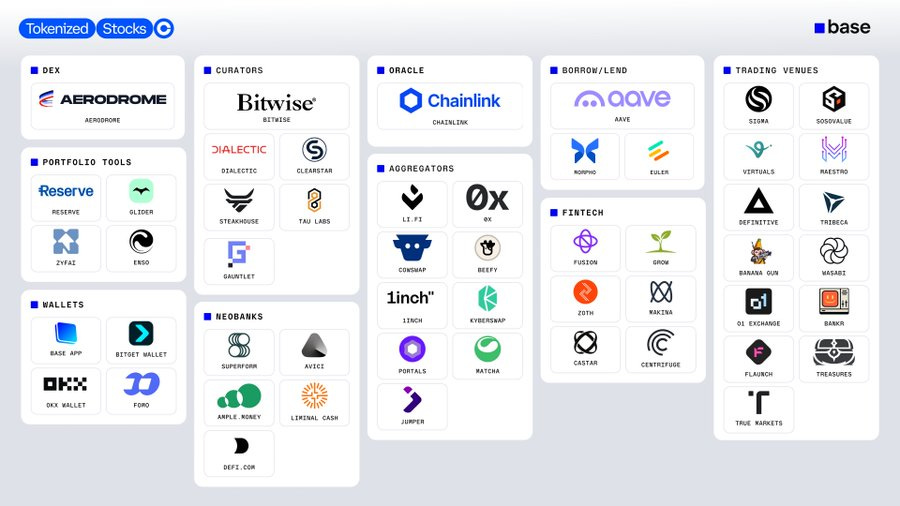
Coinbase tokenized stocks launched 24 August on Base — AAPLc, NVDAc, METAc and GOOGLc at launch, each a beneficial interest in a share held in trust at Alpaca. They shipped with the Base stack integrated from day one: Aerodrome pools for spot, Aave V4 as the first credit market, Morpho and Euler alongside. Non-US users only.
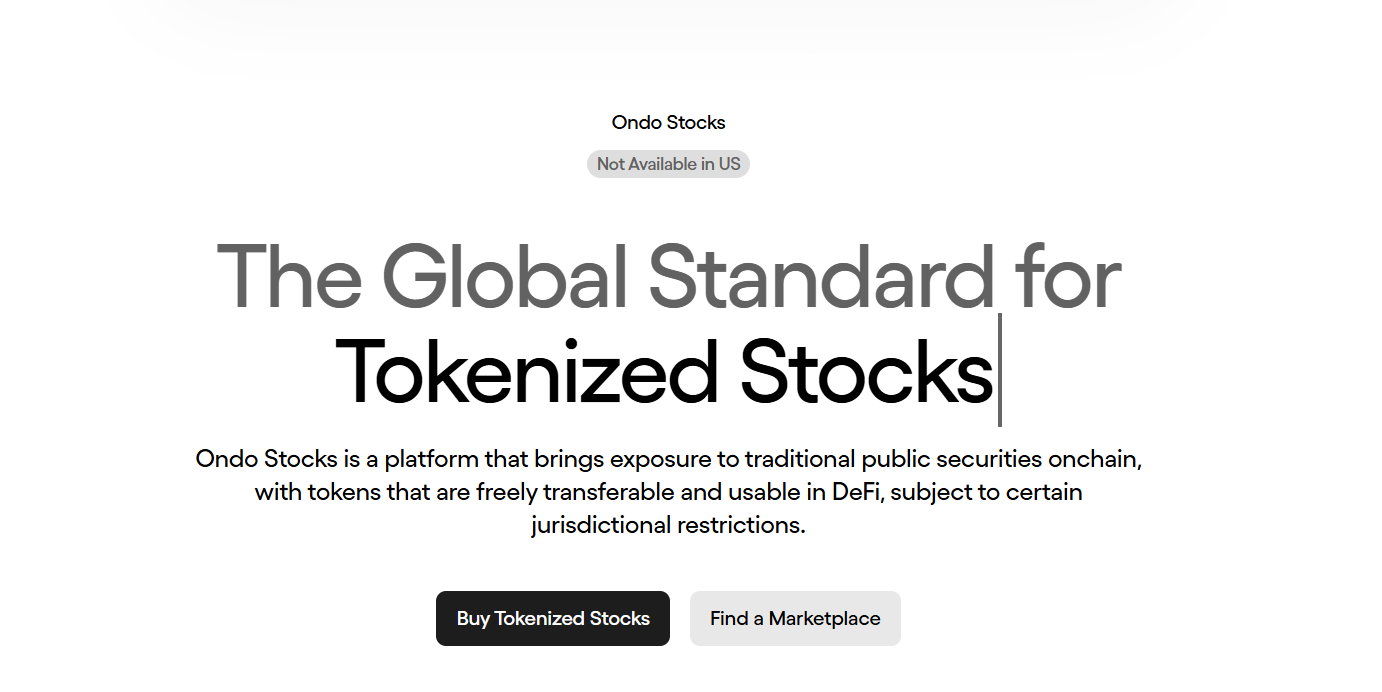
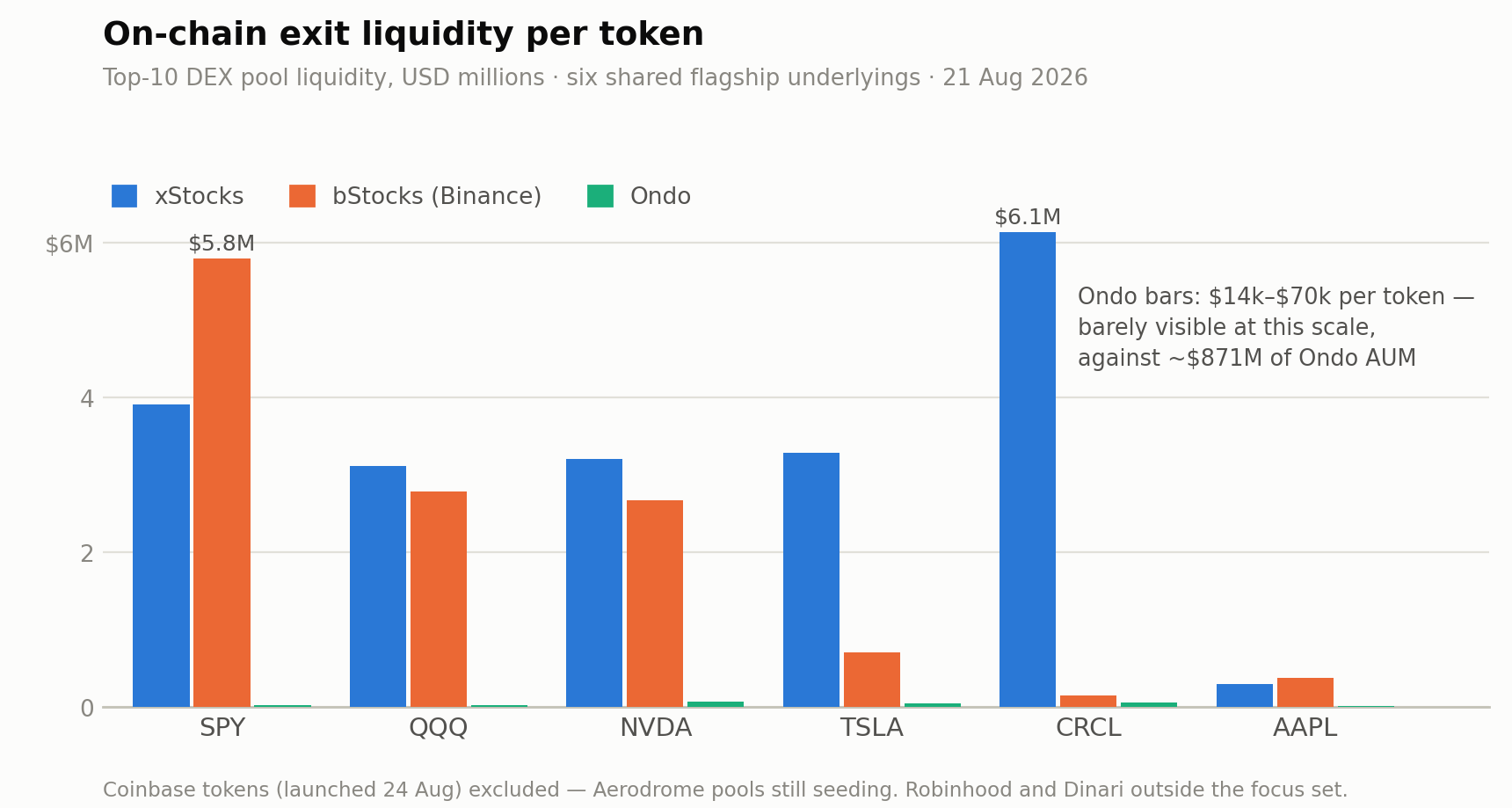
Ondo is the AUM leader at roughly $871M — and the caution of the group. Its primary market is institutions-only and its entire on-chain liquidity across six flagship tokens is about $243k, so in the strategies below it appears mostly as the thing to avoid. Robinhood’s tokens and Dinari’s dShares are niche for these purposes and skipped from here on.
Mint and redemption: the anchor your trades depend on
Redemption is not a detail — it’s the mechanism that keeps a tokenized stock trading at the price of the actual stock. When the token drifts toward the rich or the cheap, someone has to mint at fair value and sell, or buy and redeem, until the gap closes. Who is allowed to run that loop decides how tightly each wrapper tracks.
Binance is the most open: the 1:1 conversion toggle is a free, instant arb loop available to any verified user. xStocks lets KYC’d retail mint and redeem against the issuer from a $5,000 minimum, settling in about 30 seconds, with an in-kind rail that can deliver the actual shares to a brokerage account.
Coinbase offers the widest redemption menu of any wrapper — underlying shares, dollars, or USDC — at a 0.05% fee, though requests pass a compliance review rather than settle atomically. Ondo redemption is institutional-only; retail is waitlisted, which is exactly why Ondo tokens can trade away from fair value, with no one able to close the gap.
Secondary liquidity: your exit, and the liquidator’s
Depth matters twice — once when you want out, and once when a liquidation bot is selling your collateral. Across six flagship underlyings, xStocks holds about $20M of top-10 pool liquidity and bStocks about $12.5M. Ondo holds $243k against $263M of those tokens outstanding — roughly 82x less than xStocks — because it routes flow through its own desk and RFQ systems, where a lending protocol’s liquidator can’t reach. Coinbase’s Aerodrome pools are days old and still seeding.
The rest of the venue map: Kamino and Jupiter Lend accept xStocks as collateral on Solana, Aave V4 leads the new Base markets for Coinbase’s tokens, Bybit takes six xStocks as margin collateral, and trade[XYZ] on Hyperliquid runs 30+ USDC-margined equity perps — including a licensed S&P 500 perpetual — with Ostium as the Arbitrum alternative.
Leverage
How. Deposit xStocks on Kamino or Jupiter Lend, borrow USDC, and either take the liquidity while staying long or buy more of the token and loop into leveraged equity exposure. Jupiter Lend runs the most aggressive terms (up to roughly 75% LTV); Kamino publishes less but runs the healthiest market, with $24.7M supplied against $5.8M of debt. On Base, Aave V4’s Coinbase-token markets are the newest option — parameters weren’t published at launch, so go conservatively until they are.
There’s also a direct route: skip the token and trade the perp. trade[XYZ] offers around 5x on single names and indices — no wrapper risk, funding costs instead of borrowing costs.
What to watch. The defining risk is the weekend. The oracles behind these markets follow Chainlink’s 24/5 equities standard: when US markets close, the price feed freezes at a banded Friday close, and protocols are told not to liquidate on stale prices. Nothing can liquidate you from Friday night to Monday’s open — and then the entire weekend move lands on your position at once.
The asymmetry is exploitable, because the chain stays open even when the NYSE doesn’t. If Sunday-night futures look ugly, you can top up collateral or repay before the open. An unattended max-LTV position, by contrast, eats the whole gap with no intermediate price at which a partial liquidation could have saved it.
So: size the buffer for a full weekend gap, never carry tight LTV through a Friday close or an earnings date, and remember what liquidation means here — someone selling your collateral into about $7M of SPYx/QQQx pool depth. And post only the plain token, never a wrapped or vault version (see below).
Lending
How. Take the other side: supply USDC to the xStocks markets on Kamino or Jupiter Lend — or the Coinbase-token markets on Aave V4 as they open — and earn yield from stock-collateralized borrowers, usually boosted by incentives. It’s one of the few stablecoin yields backed by S&P and Nvidia exposure rather than another loop of crypto collateral.
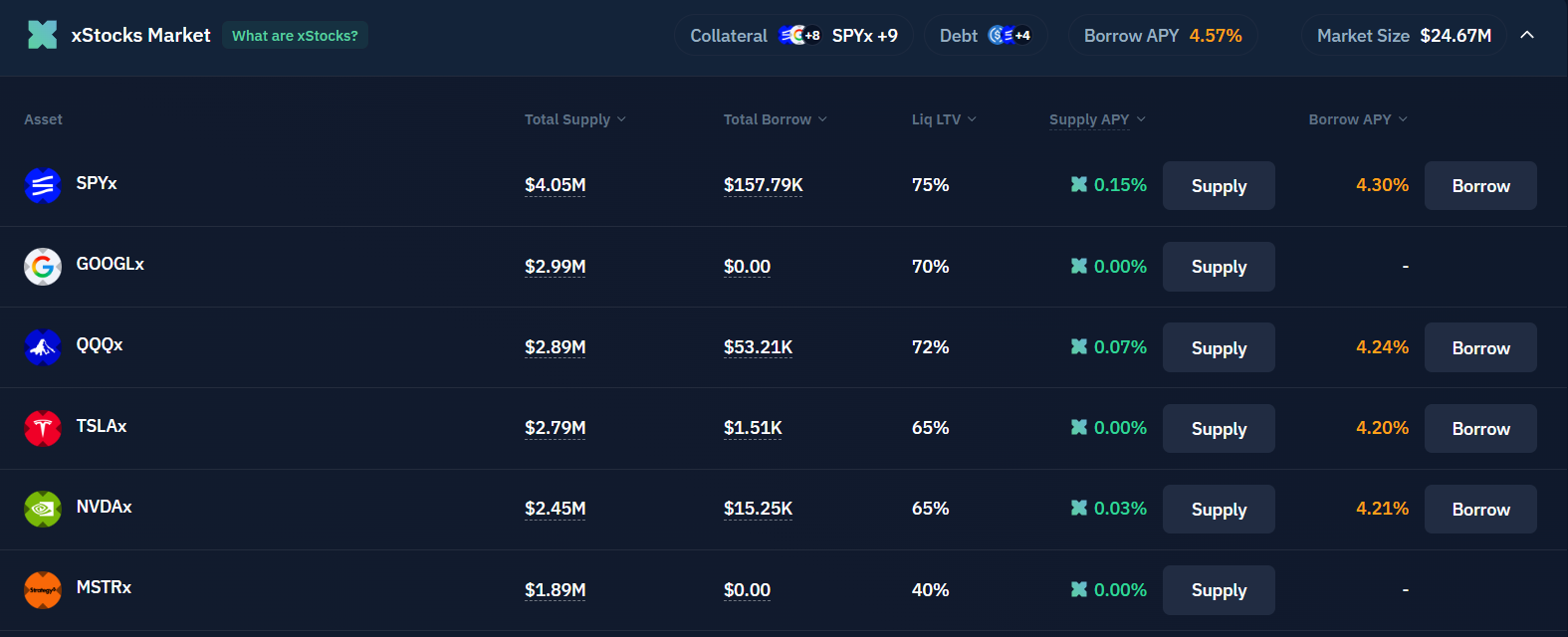
What to watch. A lender’s real risk isn’t the borrower — it’s whether the collateral behind the deposit can actually be sold. Apply one test: is the on-chain depth at least as large as the debt? Kamino passes ($5.8M of debt, ~$7M of depth). Jupiter Lend allows up to ~$14M of borrowing against that same depth — its higher yield is partly a bad-debt premium, not free money. The Ondo-collateral markets on Ethereum fail outright: SPYon and QQQon have about $26k and $22k of sellable liquidity. Run the same test on the new Base markets before chasing launch incentives.
The category-wide picture is the same warning at scale: roughly $111M of tokenized stock sits across DeFi against about $20M of best-case exit liquidity — 3–5x more collateral than can be liquidated at once.
One exploit is already on the books. In July, an attacker drained ~$403k from Edel Finance by manipulating the exchange rate of a wrapped, vault-style GOOGLx — Google’s price never moved, and the oracle was correct; the wrapper on top of the token was the attack surface. Never accept a vault-share version of a tokenized stock as collateral. And note what diversification can’t fix: Alpaca sits in the custody chain of essentially every wrapper, Coinbase’s included — reportedly ~94% of US-listed tokenized stocks under one roof.
Basis trade
How. The crypto cash-and-carry, transplanted to equities: long the tokenized stock, short the same name’s perp on trade[XYZ] or Ostium, stay delta-neutral, collect funding when leveraged longs pay shorts. On Bybit, xStocks collateral and the perp short can share margin in one account. The spot leg should be xStocks today — the only wrapper with both the depth to enter and exit at size and a retail redemption loop anchoring it to fair value. Coinbase’s tokens have the anchor to qualify once their pools deepen.
The second build is the pure arb on the token’s price itself. When a bStock trades at a premium, buy the real stock on Binance, toggle it into the token for free, and sell — reverse it for a discount. The same loop runs through Backed’s primary market for xStocks, and through Coinbase’s redemption rail at 0.05% per leg. On Ondo, retail is locked out — which is why its dislocations persist, and why seeing one is not the same as being able to monetize it.
What to watch. Funding is the engine and the hazard: equity-perp funding around earnings can swing 10x its normal range in an hour — the richest moments to be short the crowded side, and the fastest to get run over in a stale position.
The bigger risk is that your two legs decouple on schedule. Off-hours, the perp’s oracle freezes at the closing print and funding pins the perp near it, while the spot token keeps trading on 24/7 sentiment with thinning liquidity. A weekend shock can move the token 3% while the perp sits still — both prices “correct,” your basis marked against you, nothing adjustable until Monday. Size for that spread.
Three more, briefly: a 1% depeg on the spot leg erases weeks of funding income; there’s no borrow market for these tokens, so the perp is your only short; and Backed’s terms include an issuer call option allowing forced redemption at a value potentially “considerably lower” than prior prices. Read the terms before levering the structure.
Holder rights and voting
None of the wrappers make you a shareholder, and none carry voting rights — the issuers say so in near-identical language. Dividends aren’t paid out either: they’re reinvested into the token price, net of 30% US withholding where disclosed, and Coinbase adds a 5% distribution fee on top. It’s a quiet drag on any long-term carry.
What stands behind you if an issuer fails varies more than the marketing suggests. Ondo holders have a trustee with a security interest over collateral kept at or above 100.5% of tokens outstanding; xStocks holders are limited-recourse secured creditors via a Swiss security agent; bStocks discloses no trustee, pledge, or charge in any reachable public document; Coinbase’s trust-held structure reads strong on paper but is a week old.
Full shareholder rights exist only in the allowlisted real-share products. The watch item is the SEC’s proposal to rescind Reg NMS Rule 611 — the rule keeping real registered shares off open crypto rails. If it passes, the two families may finally merge.
The bottom line
Ranked by maturity: lending is the most proven — supply where depth covers debt (Kamino today), and treat higher rates elsewhere as compensation for untested liquidation risk. Leverage works, but it’s a weekend-shaped risk — size for the full Monday gap and use the always-open chain to manage what the frozen oracle can’t. Basis is the newest and richest, with the most moving parts — funding flips, scheduled Friday leg-decoupling, and an issuer call option under the long leg.
Coinbase is the variable to watch: a strong redemption rail plus Aave, Morpho, Euler, and Aerodrome from day one is the fastest route yet from launch to full strategy stack. Until then, about $20M of genuine exit liquidity sits beneath a $3B market, with one custodian under nearly all of it — trade the plumbing you can verify, and size for the weekend.